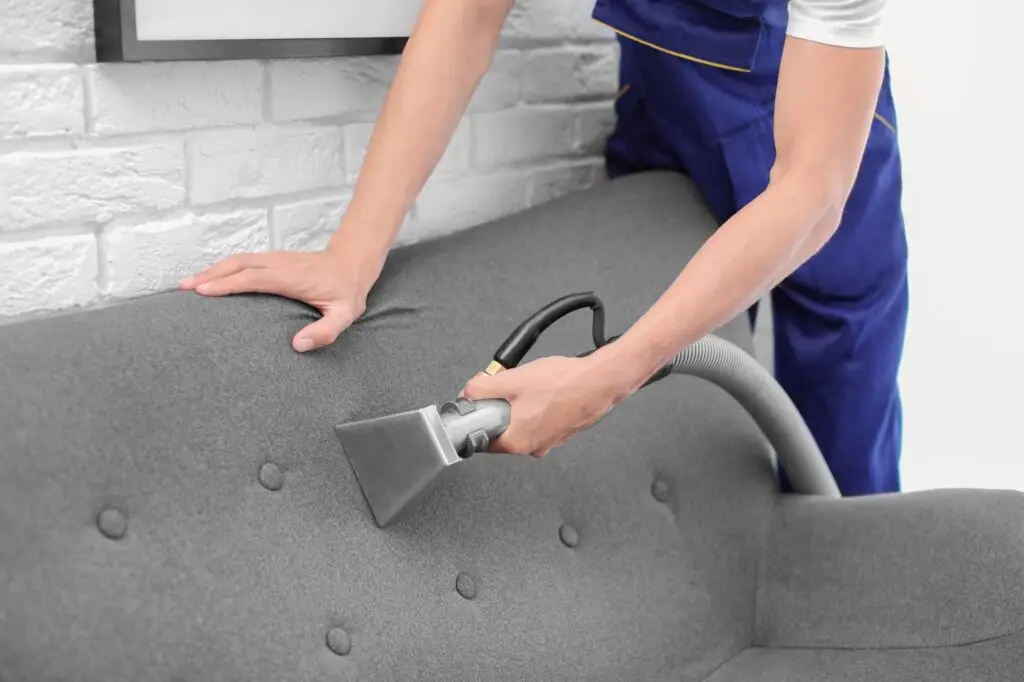
Sofas, armchairs, and upholstered dining chairs are among the most used surfaces in any home. They collect skin cells, dust, pet dander, food particles, and moisture every single day. Yet they are also among the surfaces that get cleaned least often.
Standard vacuuming removes surface debris. It does not reach the allergens embedded in fabric fibers, the bacteria settling into cushion seams, or the abrasive particles working their way into the weave with every use. Understanding what professional upholstery cleaning actually addresses changes how most homeowners think about furniture maintenance.
What upholstery cleaning removes that vacuuming cannot
Before the benefits, it helps to understand what accumulates inside upholstered furniture over time.
Fabric acts as a filter. It traps what is airborne in the room and what is deposited by contact. Over months without cleaning, the following build up inside the fibers and padding:
- Dust mite colonies and their waste particles, which are a primary trigger for asthma and allergic rhinitis
- Pet dander, which is microscopic skin flakes rather than hair, and which stays suspended in air for hours before settling
- Pollen tracked in from outside, particularly during Massachusetts spring and summer seasons
- Mold spores in humid environments, especially in coastal homes or rooms with poor ventilation
- Bacteria from skin contact, food spills, and pet use
- Fine sand and grit that causes fiber abrasion with every use
None of these are visible. By the time a sofa shows visible staining or develops an odor, significant biological and physical accumulation has already occurred inside the material.
Benefit 1: furniture lasts significantly longer
Dirt and fine particulate matter inside upholstery fabric is physically abrasive. Every time someone sits down, adjusts position, or stands up, those particles grind against the fibers. Over time, this friction weakens the weave, causes pilling, and accelerates thinning in high-contact areas like seat cushions and armrests.
Regular upholstery cleaning removes this abrasive material before it causes permanent fiber damage. The practical result is measurable: well-maintained upholstered furniture lasts years longer than equivalent pieces that are only vacuumed. For quality furniture that represents a significant investment, the cost of periodic professional cleaning is a fraction of early replacement.
On Martha’s Vineyard, salt air and coastal humidity accelerate fiber degradation in upholstered pieces that sit near windows or in rooms where sea air circulates. This makes consistent cleaning more consequential for island homeowners than for those in inland climates.
Benefit 2: indoor air quality improves immediately
Every time someone sits on an uncleaned sofa, the compression releases trapped particles back into the room air. Dust mites, pollen, and dander that have been captured in the fabric become airborne again and circulate through the room.
The EPA identifies upholstered furniture as a significant reservoir for indoor particulate matter. In Massachusetts, where homes are sealed tightly for months during winter, indoor air quality depends heavily on the cleanliness of soft surfaces that continuously release and recapture particles.
Professional upholstery cleaning extracts these particles from the full depth of the fabric, not just the surface. After a thorough clean, the furniture stops acting as a release mechanism and returns to being a passive filter. The difference in air quality in the room is noticeable within hours.
Benefit 3: allergens are reduced at the source
Upholstered furniture is one of the highest-concentration allergen sources in any home. Dust mites, in particular, thrive in the warm, humid conditions inside cushion padding. They feed on shed skin cells and reproduce in large numbers in undisturbed fabric.
According to the American Lung Association, dust mites are among the most common triggers for indoor allergic reactions and asthma attacks. Their waste particles are extremely fine and become airborne with any disturbance of the fabric they inhabit.
Professional upholstery cleaning removes both the dust mites and their waste products from deep within the fabric. This is the only effective intervention for high mite populations in upholstery. Vacuuming alone does not penetrate far enough into the padding to make a meaningful difference.
For households with allergy sufferers or anyone with asthma, this single benefit is often enough to justify professional upholstery cleaning on a regular schedule.
Benefit 4: odors are eliminated, not masked
Upholstered furniture absorbs odors from cooking, pets, perspiration, and spills. These smells originate from bacteria and organic matter embedded in the fabric. Surface sprays and air fresheners deposit fragrance over the existing odor without removing the source. The result is a temporary layered smell that returns quickly.
Professional upholstery cleaning removes the bacteria and organic matter that produce odors. The fabric is extracted and dried, leaving it genuinely neutral rather than chemically scented. This is particularly relevant for:
- Homes with pets, where dander and organic material accumulate quickly in fabric
- Vacation rental properties on Martha’s Vineyard, where guest turnover means multiple occupants leaving different odor traces in upholstered furniture
- Older furniture that has absorbed years of household ambient smells
A sofa that smells clean without any fragrance is a reliable sign that the cleaning addressed the source rather than the surface.
Benefit 5: stains respond better to professional treatment
DIY stain removal often makes upholstery stains worse. The most common errors are using too much liquid, scrubbing instead of blotting, and applying products that are not compatible with the fabric type. Each of these can permanently set a stain, spread it to a larger area, or damage the fabric finish.
Professional upholstery cleaning uses fabric-specific products and extraction techniques that lift stains from the fiber rather than pushing them deeper. Older stains that have been partially treated incorrectly at home can often still be significantly improved with professional equipment.
The key is acting on stains as early as possible. Fresh organic stains (food, beverages, pet accidents) respond much better than those that have dried and oxidized. When in doubt, blot with a clean, dry cloth and call a professional rather than attempting a full DIY removal.
Benefit 6: fabric protection can be applied after cleaning
Many professional upholstery cleaning services offer fabric protection treatment as a follow-up step. This treatment applies a barrier to the fabric that causes liquids to bead on the surface rather than immediately absorbing into the fibers.
The protection does not make fabric stain-proof. It buys time, typically several minutes, to blot a spill before it penetrates. For households with children, pets, or vacation rental use, this window is practically valuable and reduces the frequency of deep stain treatments needed.
Fabric protection is only effective when applied to genuinely clean upholstery. Applying it to fabric with existing soil or residue traps contaminants inside the fiber. This is another reason the cleaning itself needs to happen first.
Benefit 7: a healthier environment for children and pets
Children and pets are in closer, more sustained contact with upholstered furniture than adults. Children sit on the floor next to sofas, press their faces into cushions, and put their hands on fabric surfaces before touching food or their mouths. Pets lie directly on cushions for hours at a time.
If the upholstery carries bacteria, chemical residues from previous DIY cleaning, or high concentrations of allergens, these household members are exposed at a greater intensity than adults who sit normally in chairs.
Professional upholstery cleaning sanitizes the fabric without leaving behind the sticky, soapy residue that incompletely rinsed DIY products produce. That residue is itself an issue: it attracts new soil faster and can irritate sensitive skin on contact.
A regular cleaning schedule that includes upholstery maintenance ensures these surfaces are consistently safe for the most contact-intensive household members.
Benefit 8: appearance is restored across the whole piece
Upholstered furniture that has not been professionally cleaned develops a dull, slightly grey cast as dust accumulates in the fabric. Cushions flatten and lose their shape. Color vibrancy fades under the surface film. These changes are gradual and easy to normalize until the furniture is properly cleaned and the difference becomes visible.
Professional extraction removes the grey film and allows the original fabric color to show fully. High-quality upholstery cleaning also restores some of the texture and resilience of the fabric itself, particularly in woven materials where fiber compression from use and accumulated particles flattens the pile.
The visual result after a professional clean often makes homeowners reconsider furniture they were planning to replace.
Benefit 9: better mental clarity in a genuinely clean space
This benefit is harder to measure but consistently noted by homeowners who maintain clean upholstery on a regular schedule. Living in a space where surfaces are genuinely clean, not just appearing clean, produces a different quality of comfort and ease.
A sofa that smells fresh, looks its original color, and has no accumulated grime contributes to the atmosphere of a room in ways that go beyond aesthetics. The absence of stale smell, visible wear, and the knowledge that the surface is actually clean rather than visually acceptable creates a quality of relaxation that dirty furniture, however familiar, does not provide.
How often to clean upholstered furniture
Frequency depends on use, occupancy, and environment:
- Households with pets or allergy sufferers: every 6 months
- Active family households: once a year, with vacuuming between visits
- Lightly used guest rooms or formal living rooms: every 18 to 24 months
- Vacation rental properties: at seasonal opening and closing, plus after any guest with a pet
Martha’s Vineyard homeowners with ocean-facing rooms or high summer humidity benefit from cleaning at the higher frequency end of these ranges. Salt air and humidity accelerate the biological processes that produce odors and degrade fabric.
ICP Cleaning Services includes upholstery care as part of deep cleaning services for homes across Martha’s Vineyard and Massachusetts. For properties transitioning between seasons or rental periods, combining upholstery and deep cleaning in a single visit is the most efficient approach.
Frequently asked questions about upholstery cleaning
How often should I professionally clean my sofa? For most households, once a year is sufficient. Homes with pets or allergy sufferers benefit from twice per year. Vacation rental properties should be cleaned at seasonal transitions. Vacuuming with an upholstery attachment between professional cleanings maintains the surface between visits.
Can all upholstery fabrics be professionally cleaned? Most can, but the method varies by material. Natural fibers like cotton, linen, and wool require different products and techniques than synthetic materials like microfiber or polyester. Leather requires its own specialized approach. Professional cleaners identify the fabric type before selecting a method. Check the cleaning code on your furniture tag: W means water-based cleaner, S means solvent only, WS means either, and X means vacuum only.
Why does my sofa smell musty after cleaning? This usually indicates insufficient drying rather than a problem with the cleaning itself. Professional equipment reduces moisture significantly, but if upholstery is not dried completely before use, residual moisture creates conditions for mildew. Ventilating the room and running a fan after cleaning prevents this. If the smell was present before cleaning, the source may require further extraction.
Is upholstery cleaning safe for children and pets? Yes, when performed by a professional using appropriate products and thorough extraction. The concern with DIY cleaning is incomplete rinsing, which leaves chemical residues in the fabric. Professional extraction removes both the cleaning agents and the contaminants. Allow the furniture to dry fully before resuming normal use.
What is the difference between steam cleaning and dry cleaning for upholstery? Steam cleaning (hot water extraction) uses heated water injected into the fabric and immediately extracted. It is effective for deep cleaning and works well on most synthetic fabrics. Dry cleaning uses solvents rather than water and is appropriate for delicate natural fibers that can shrink or warp with moisture. A professional identifies which method suits each piece before beginning.
Can professional upholstery cleaning remove pet dander from a sofa? It significantly reduces it. Pet dander is microscopic and embeds deep into fabric fibers, well beyond the reach of household vacuuming. Professional hot water extraction removes the majority of dander from the accessible depth of the fabric. For households with severe pet allergies, combining professional upholstery cleaning with allergen-proof furniture covers on cushions provides the most effective control.