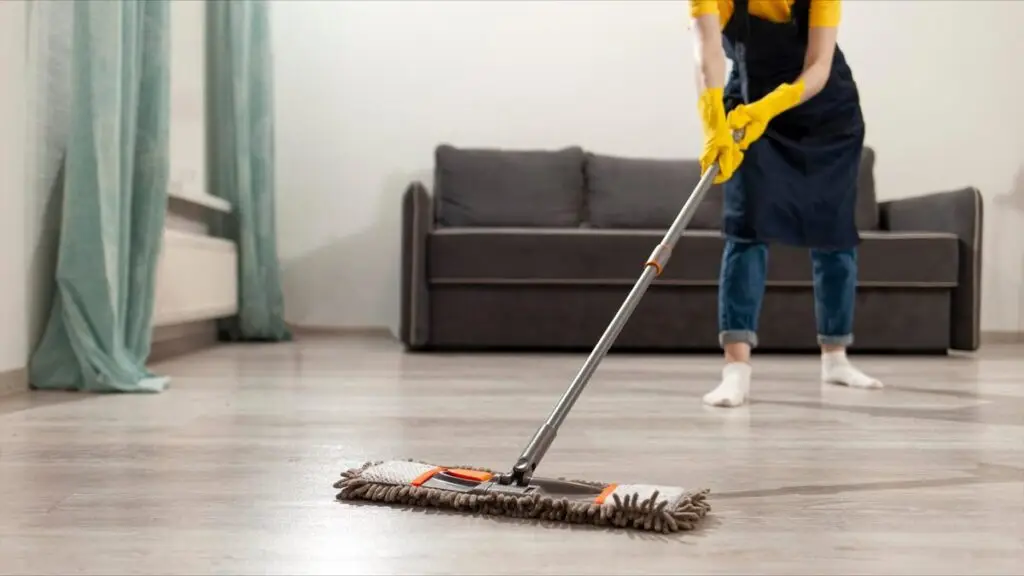
You just mopped the entire kitchen and ended up with sticky floors after mopping. A surface that grabs at your feet with every step. Sticky floors after mopping are one of the most frustrating cleaning results, especially when you have done everything right, or so you thought.
Sticky floors after mopping are almost always the result of the cleaning process itself, not the floors. Understanding the causes of sticky floors after mopping is the fastest way to fix it and prevent it from happening again.
The most common cause of sticky floors after mopping: too much soap
Soap residue is the number one cause of sticky floors after mopping. Most floor cleaners, even those labeled as floor-specific, contain surfactants that bond to dirt and lift it from the surface. The problem is that these surfactants do not simply evaporate when the floor dries. If you use too much product, or if you do not rinse the floor properly, the residue stays behind and becomes sticky as it dries.
This is especially common with all-purpose cleaners not designed for floors, with concentrated products used at the wrong dilution, and with pine-based or citrus-based cleaners that leave a film.
Other mopping mistakes that cause sticky floors
Using a dirty mop
Another cause of sticky floors after mopping is a dirty mop. A dirty mop is a common cause of sticky floors after mopping that most people overlook. A mop that has not been properly cleaned between uses carries old detergent residue, old dirt, and bacteria. Every time you mop with it, you are redistributing that residue across the floor. The result is a thin but sticky film that builds up over time.
Wash your mop head after every use. If you use a microfiber mop, machine wash it without fabric softener. Fabric softener coats the fibers and significantly reduces their ability to absorb residue.
Using too much water
Excess moisture is another cause of sticky floors after mopping. Wet mops leave more moisture than hard floors can absorb quickly. As the water evaporates, it concentrates any cleaning product or mineral content from your tap water into a thin, sticky layer. This is particularly common in areas with hard water.
On Martha’s Vineyard, where humidity is high during the summer months, floors can take longer to dry. This gives the product more time to settle and concentrate on the surface. Therefore, a barely damp mop technique is far more effective than a traditional wet mop.
Wrong product for the floor type
Using the wrong product for the floor type creates sticky floors after mopping. Not all floor cleaners work on all surfaces. Using a product formulated for vinyl on hardwood, or a general-purpose cleaner on laminate, can leave a residue that the surface is not designed to handle. Always match the cleaner to the specific floor material.
Skipping the rinse step
Many mopping routines skip a clean-water rinse pass after cleaning. However, this final step is what removes lingering soap from the surface. Without it, even a correctly diluted cleaner will leave a film.
How to fix sticky floors right now
If your floors are already sticky after mopping,, here is how to get rid of sticky floors without making the problem worse.
Step 1: Prepare a rinse solution. Fill your bucket with plain warm water. Do not add any cleaner. If the residue is heavy, add a small amount of white vinegar, about half a cup per gallon of water. Vinegar cuts through soap film effectively on most hard surface floors. Do not use vinegar on natural stone, hardwood, or laminate, as it can damage the finish.
Step 2: Wring the mop thoroughly. The mop should be barely damp, not dripping. Excess water prolongs drying time and can add more mineral residue.
Step 3: Mop in sections. Work in small sections and rinse the mop frequently in clean water. Change the water if it becomes cloudy or soapy.
Step 4: Allow to dry completely. Open windows or use a fan to speed up drying. Do not walk on the floor until it is fully dry.
In most cases, one or two rinse passes with plain water are enough to remove the sticky residue. For floors that have years of product build-up, you may need a professional deep cleaning to restore the surface properly.
How to prevent sticky floors going forward
Use the right amount of product
Less is almost always more with floor cleaners. Follow the manufacturer’s dilution instructions exactly. If the product recommends one tablespoon per gallon, do not add more thinking it will clean better. The excess product has nowhere to go except onto the floor surface.
Choose a no-rinse cleaner
Several floor cleaning products are formulated to evaporate cleanly without leaving residue. These are labeled as no-rinse formulas. While they still require correct dilution, they reduce the risk of sticky build-up significantly.
Always do a final rinse pass
Make the clean-water rinse pass a standard part of your mopping routine. It takes only a few extra minutes but removes the product that causes stickiness before it dries.
Clean your mop every time
Develop the habit of washing or rinsing your mop head after every use. A clean mop distributes less residue and picks up more dirt. Store it with the head up so it dries completely between uses.
When sticky floors signal a deeper problem
Sometimes sticky floors after mopping point to an issue beyond the cleaning routine. Heavy product build-up from years of over-mopping can create a layer that requires stripping rather than standard cleaning. Certain wax or polish products, when applied repeatedly without stripping, also create a build-up that no amount of mopping will fix.
In these cases, a professional floor cleaning service can assess the build-up and use appropriate techniques to restore the surface. Professional floor restoration as part of a deep cleaning service can address accumulated product build-up that standard mopping cannot reach.
For vacation rental properties that receive heavy use during the summer season, professional cleaning at the start and end of the season prevents the kind of product accumulation that leads to persistent stickiness. The turnover cleaning service includes floor care as a standard component.
A note for Martha’s Vineyard homes
Island homes face specific challenges that affect floor cleaning. High humidity during the summer slows evaporation, which means mopping solutions stay wet longer and concentrate as they dry. Salt carried in on shoes and through open windows can mix with cleaning residue and create an additional layer of stickiness.
For properties left empty between seasons, a thin residue layer can attract dust and become a magnet for grime over months. Opening the property to a professional clean before guests arrive is always a good investment.
Product-by-product guide: what causes stickiness and what does not
Understanding exactly which products cause sticky floors helps you make better choices when selecting a cleaner. The following breakdown covers the most common floor cleaning products and their residue risk.
Pine-based cleaners (Pine-Sol and similar): These are one of the most common causes of sticky floors in residential homes. The pine oil and emulsifiers in these products leave a significant residue on hard floors, particularly when used at full strength or slightly above the recommended dilution. They are designed for dilution in large volumes of water, and even small overages create stickiness.
Citrus-based all-purpose cleaners: Similar to pine-based products, citrus cleaners contain oils that leave a film on hard surfaces. They are more appropriate for surface spraying and wiping on countertops than for floor mopping.
Murphy Oil Soap: Often marketed for wood floors, Murphy Oil Soap actually contains soap that builds up on sealed and semi-sealed floors over time. It is not appropriate for mopping large floor areas and is a common culprit behind the persistent sticky-floor problem many homeowners report despite switching products.
Dish soap used on floors: Dish soap is highly concentrated and designed for a sink full of water, not a mop bucket. Even a small amount added to a mop bucket creates a foam and residue that is very difficult to rinse away from floor surfaces.
Steam mops with cleaning solution tanks: Some steam mops allow users to add cleaning solution to the water tank. The steam deposits the diluted solution across the floor surface, but the concentration is inconsistent. Sticky patches develop where the concentration is higher than expected.
Dedicated hard floor cleaners at correct dilution: Products specifically formulated for hard floors, used at the exact dilution stated on the label, rarely cause stickiness. The issue with these products is almost always over-use, not the product itself.
Plain distilled water: The only guaranteed no-residue option for a finish rinse. A final pass with a barely damp mop of distilled water and immediate drying eliminates any residue from the previous cleaning step.
Restoring floors that have years of product build-up
If your floors have accumulated product build-up over many cleaning cycles, a single rinse session may not fully resolve the stickiness. Long-term build-up creates a layer that requires a more deliberate stripping process.
For most hard floor surfaces, including vinyl, laminate, and sealed hardwood, a commercial floor stripper applied according to the manufacturer’s instructions will remove accumulated residue. These products are stronger than household cleaners and should be used with ventilation and protective gloves.
After stripping, the floor needs a thorough clean-water rinse to remove the stripper residue, followed by a dry pass to lift all remaining moisture.
For natural hardwood floors with significant build-up, stripping products may not be appropriate depending on the finish. In these cases, consulting a flooring professional before attempting any stripping process is the right step. Applying the wrong product can permanently damage the finish.
Getting your floors truly clean after mopping
Sticky floors after mopping are always a process problem. Once you understand the cause, sticky floors after mopping become easy to prevent., not a floor problem. The fix is nearly always adjusting how much product you use, how wet your mop is, and whether you finish with a clean-water rinse. For floors with existing build-up, a thorough rinse session or professional service will reset the surface.
The right technique, combined with the right amount of product, eliminates sticky floors after mopping for good. Sticky floors after mopping are not permanent. Fix the root cause with the right product and a clean mop. Your floors will feel smooth, non-tacky, and truly clean. On Martha’s Vineyard, where seasonal use and coastal conditions add extra demands, a consistent correct routine is the most reliable way to prevent sticky floors after mopping.