Completing a home renovation is an exhilarating milestone for any Massachusetts homeowner, marking the transition from chaotic construction to the enjoyment of a reimagined space. However, the moment the contractors pack up their tools, a new reality sets in: the pervasive presence of fine dust and debris that coats every surface. Post-construction cleaning is not merely a cosmetic touch-up; it is a specialized house clean designed to remove the microscopic remnants of building materials that standard cleaning simply cannot address. Without a strategic post-construction house clean, this lingering particulate matter can compromise indoor air quality and diminish the polish of your newly renovated home.
Understanding the scope of a professional post-construction cleaning service is crucial for managing your expectations and ensuring your home is truly ready for occupancy. Unlike a routine maid service, this type of house clean involves heavy-duty equipment, specialized solvents, and a meticulous eye for detail to tackle issues like paint overspray, adhesive residue, and silica dust. By preparing for this final house clean with the same rigor as the construction itself, you ensure that your investment is protected and that your family can move back into a safe, pristine environment.
The Challenges of Construction Dust
The most persistent adversary in any renovation project is construction dust, which is why a specialized house clean is so essential. This is not the typical household gray fluff found under a sofa; it is a heavy, abrasive mixture of drywall plaster, sawdust, cement, and sometimes silica. Because these particles are incredibly fine, they can remain airborne for days after the work has stopped, slowly settling onto ledges, light fixtures, and inside cabinets. Effective post-construction cleaning requires understanding that dust behaves like a fluid, flowing into the smallest crevices and coating vertical surfaces just as heavily as floors.
- Airborne Persistence: Fine particulate matter can float for up to 72 hours before settling completely. This means performing a house clean too soon can result in a layer of dust reappearing the next day. Professional post-construction cleaning crews often recommend a waiting period or a multi-stage approach to account for this settling time.
- Abrasive Nature: Drywall dust is highly abrasive and can scratch delicate finishes like hardwood or marble if wiped incorrectly during the house clean. It requires lifting techniques rather than scrubbing. Using the wrong cloth or pressure can turn a post-construction house clean into a surface restoration project.
- Health Implications: Breathing in construction byproducts can irritate the respiratory system and trigger allergies. A thorough house clean is a health necessity, not just an aesthetic one, especially for families with young children or pets. Silica dust, often found in concrete and stone work, poses specific long-term health risks if not properly abated during the post-construction cleaning.
Why Standard Vacuums Aren’t Enough
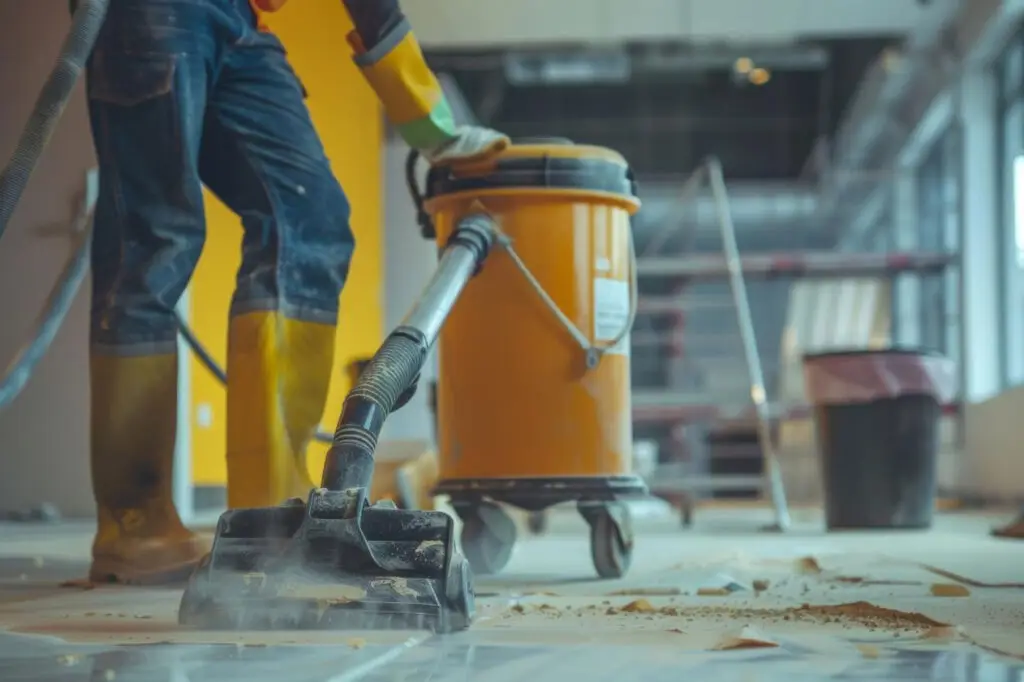
Many homeowners attempt to tackle the initial cleanup with their household vacuum, only to find the machine clogged or broken within minutes. Standard residential vacuums are designed for light soil and pet hair, not the heavy, dense particulate matter generated by construction. This is why specialized equipment is a cornerstone of an effective post-construction house clean. The filters in standard machines are often not fine enough to trap drywall dust, which means the vacuum simply recirculates the dust back into the air, defeating the purpose of the house clean.
- Filtration Efficiency: Professional post-construction cleaning relies on industrial-grade vacuums equipped with HEPA (High-Efficiency Particulate Air) filters. These filters are certified to trap 99.97% of particles that are 0.3 microns in diameter. This ensures that the microscopic dust is actually captured and removed from the environment during the house clean, rather than being blown back out of the exhaust.
- Motor Protection: Construction dust is incredibly fine and can bypass standard seals, entering the motor housing of a residential vacuum. This accumulation causes the motor to overheat and eventually burn out. Commercial equipment used in a post-construction house clean is built with sealed systems and bypass motors specifically designed to handle this type of abuse without failure.
- Capacity and Power: The volume of debris in a post-construction cleaning project is significantly higher than daily living mess. Industrial vacuums have larger canisters and stronger suction power to pull heavy debris from deep within carpet fibers and floor gaps, a standard requirement for a quality house clean.
Protecting Your HVAC System
Your home’s heating, ventilation, and air conditioning (HVAC) system is the lungs of your house, and during construction, it often inhales a significant amount of dust. Even if vents were covered during the work, micro-particles inevitably find their way into the ductwork. Turning on the AC or heat without addressing this as part of your post-construction house clean can blast accumulated dust throughout your freshly cleaned home.
- Filter Replacement: One of the first steps in the house clean phase should be checking and replacing the HVAC filters. It is often recommended to use a cheaper, “sacrificial” filter during the final days of work and the initial clean, swapping it for a high-quality filter once the post-construction cleaning is complete.
- Vent and Register Cleaning: Registers and return vents are magnets for static dust and must be addressed during the house clean. They need to be removed, washed, and dried before being reinstalled. Simply wiping the surface is insufficient, as dust accumulates on the back of the grates and just inside the duct opening.
- Duct Inspection: For major renovations involving drywall sanding or floor refinishing, professional duct cleaning might be necessary alongside your post-construction house clean. A camera inspection can reveal if significant debris has settled in the main trunk lines, which could restrict airflow or harbor allergens.
Critical Areas That Require Special Attention
While floors and countertops are obvious targets, a true post-construction house clean is defined by the attention given to the areas that are often overlooked. These are the details that, if missed, make a home feel “almost” finished rather than brand new. Contractors are focused on the build, not the polish, leaving behind residues that require the specific chemistry and technique found in a professional house clean.
Removing Adhesive Residue from Windows and Glass
New windows and appliances come covered in protective films and manufacturer stickers that can be notoriously difficult to remove. Over time, or with exposure to sunlight, the adhesive cures and hardens, becoming a stubborn gummy residue that a standard house clean cannot remove. Scraping these incorrectly can lead to permanent scratches on expensive tempered glass or stainless steel finishes.
- The Chemistry of Removal: Water and soap are rarely enough to dissolve industrial adhesives. Post-construction cleaning professionals use specific solvents, such as citrus-based cleaners or denatured alcohol, which break down the glue’s molecular bond without damaging the glass surface. Knowing which solvent to use on which surface is a key part of the expertise required for a renovation house clean.
- The Danger of Scrapers: While razor scrapers are a common tool in post-construction cleaning, they must be used with extreme caution. On tempered glass, which is common in sliding doors and safety windows, a scraper can dislodge microscopic glass fines and drag them across the surface. A professional house clean technician knows to test a small area and listen for the tell-tale sound of grit before proceeding.
- Frame and Track Cleaning: Window tracks are often filled with sawdust, drywall mud, and stucco. Cleaning these requires powerful vacuum attachments and detail brushes to loosen the impacted dirt, a standard step in a thorough house clean. Ensuring the weep holes are clear is also vital for proper drainage and preventing future water damage.
Deep Cleaning Grout and Tile Surfaces
Newly installed tile often has a layer of “grout haze”—a thin, cloudy film of cement residue left behind after the grouting process. If this haze is not removed promptly during the post-construction house clean, it can cure and become extremely difficult to clean. Furthermore, grout is porous and can absorb dirt and liquids immediately if not properly treated during the house clean.
- Acid Washing Risks: Removing heavy grout haze sometimes requires acidic cleaners. However, acid can etch natural stone like marble, travertine, or limestone. A post-construction cleaning professional understands the pH balance required to clean the grout without destroying the tile or the surrounding fixtures.
- Sealing Importance: Once the grout is perfectly clean and dry, it should be sealed. This creates a barrier that prevents stains and moisture from penetrating the porous material. In a post-construction house clean context, ensuring the floor is pristine before sealing is critical, otherwise, you are simply sealing in the dirt.
- Texture Challenges: Textured tiles trap construction dust in their crevices. Mops often just glide over the top. Scrubbing with rotary machines or stiff-bristled brushes is often necessary to agitate the dust out of the texture before it can be extracted during the house clean.
Preparing Your Home for the Final Walkthrough
The final walkthrough with your contractor is the moment you sign off on the project, so the home needs to be clean enough to reveal any imperfections. A layer of dust can hide scratches, paint drips, or uneven finishes. By scheduling your post-construction house clean before this meeting, you ensure you are inspecting the actual quality of the work, not the mess on top of it.
- The “Blue Tape” Method: Walk through your home with a roll of blue painter’s tape after the house clean is done. Mark any paint drips, scratches, or missed caulking that the cleaning reveals. This visual aid helps the contractor quickly identify and rectify punch-list items.
- Check Inside Cabinets: Open every drawer and cabinet. Construction dust loves to hide in the back corners of joinery and on the hinges. Ensure the runners are free of grit, which can affect the smooth operation of soft-close mechanisms, a detail often checked during a post-construction house clean.
- Lighting Inspection: Turn on all lights and check the fixtures. Dust inside glass shades or on bulbs can dim the light and cast shadows. Clean fixtures ensure you are seeing the true color and finish of your walls and floors, highlighting the results of a thorough house clean.
The Final Step in Your Renovation Journey
The transition from a construction site to a comfortable home is bridged by the quality of the post-construction house clean. Investing in a professional post-construction cleaning service in Massachusetts ensures that the health of your family and the integrity of your new finishes are prioritized. By understanding the challenges of dust, the need for specialized equipment, and the critical areas that require attention, you can manage the final phase of your renovation with confidence. When the house clean is complete and the dust finally settles, you should be left with nothing but the joy of your new space, ready for memories to be made.