Renovation work creates a level of mess that regular cleaning products were never designed to handle. Fine dust settles into every crack, paint splatters land on new fixtures, and debris hides behind appliances and inside cabinets. Without the right approach, post-construction cleaning spreads the problem instead of solving it.
This guide covers the 7 most common problems homeowners face after a renovation, with step-by-step solutions for each one. Whether you finished a kitchen remodel in Tisbury or a full bathroom renovation in Edgartown, the same principles apply.
What does post-construction cleaning involve?
Post-construction cleaning goes well beyond a standard house clean. It requires specific tools, the right products for each surface, and a strict sequence to avoid re-contaminating areas you have already finished.
A complete post-construction clean covers:
- Fine dust removal from all surfaces, including HVAC systems
- Paint splatter and adhesive residue on floors, glass, and fixtures
- Construction debris: drywall fragments, sawdust, caulk, insulation fibers
- Safe cleaning of new surfaces without damaging finishes or sealants
- Window and glass restoration after construction film buildup
- Floor treatment by material type (hardwood, tile, laminate, concrete)
- Final surface restoration: countertops, baseboards, cabinetry
Problem 1: Fine construction dust on every surface
Construction dust is the defining challenge of any post-renovation cleanup. Drywall, concrete, wood, and insulation all produce microscopic particles that stay airborne for days, resettling on surfaces you have already wiped.
A single pass with a regular vacuum makes things worse. Standard filters cannot capture fine construction particles and simply push them back into the air.
How to remove construction dust correctly
- Replace HVAC filters first. Before doing anything else, change every filter in the house. Running the system with old filters during cleanup spreads dust through every room.
- Work top to bottom. Start at ceiling level: light fixtures, crown molding, ceiling fans. Clean floors last. Reversing this order means cleaning floors twice.
- Use a HEPA vacuum only. Only vacuums with certified HEPA filters capture fine construction particles. Everything else recirculates them.
- Follow with damp microfiber. After vacuuming, wipe all surfaces with a damp microfiber cloth. Damp cloths trap and hold fine particles instead of pushing them around.
- Plan for two full passes. Construction dust settles in waves as airborne particles gradually fall. One pass never produces a truly dust-free result.
Professional post-construction cleaning teams use industrial HEPA equipment and follow a verified sequence. For large renovations, that investment saves significant time and produces better results than a DIY approach.
Problem 2: Paint splatters and residue
Paint ends up on floors, fixtures, window glass, and countertops, often on surfaces that were supposed to be protected. The removal approach depends on two things: the type of paint (latex or oil-based) and the material underneath. Using the wrong technique causes permanent damage.
Paint removal by surface type
- Hardwood and tile floors: Use a plastic scraper at a low angle to lift dried splatters. Never use metal scrapers on finished floors.
- Glass and windows: A razor blade at 45 degrees removes dried paint cleanly. Keep the blade lubricated with soapy water throughout to prevent scratching.
- Fixtures and hardware: Soak a cloth in the appropriate solvent (warm water for latex, mineral spirits for oil-based paint) and press against the residue for a few minutes before wiping.
- Stone countertops: Use warm water with a small amount of dish soap for latex paint. Avoid solvents entirely on marble or granite. They strip sealants and leave permanent dull spots.
- Plastic and PVC trim: Apply a small amount of rubbing alcohol on a soft cloth. Test in a hidden area first before applying to the full surface.
For widespread paint residue across multiple surfaces, professional steam cleaning is the safest option. Steam softens dried paint and lifts it without putting new finishes at risk.
Problem 3: Construction debris and leftover materials
Beyond dust and paint, renovations leave solid debris behind: drywall fragments, wood chips, caulk drips, insulation fibers, and contractor packaging. Each type needs a different removal approach.
Some materials, particularly insulation fibers, pose a real health risk if handled incorrectly. The EPA recommends treating post-renovation debris with caution, especially in older homes where materials may contain hazardous compounds.
How to remove construction debris
- Start with large pieces by hand before vacuuming. Large items can clog or damage equipment.
- Wear gloves and a dust mask when handling insulation fibers. Use a HEPA vacuum to capture loose fibers from surfaces and floors.
- Allow caulk to cure fully before removal. Score the edges with a plastic scraper and peel away cleanly.
- Damp-mop sawdust from hard floors rather than dry-sweeping. Sweeping sends particles airborne and extends the dust problem.
- Check inside cabinets, behind appliances, and in corners. Contractors frequently leave protective packaging in concealed spots.
Rushing debris removal always creates extra work later, especially when fine material gets ground into new flooring or sealed under paint touch-ups.
Problem 4: Cleaning new surfaces without causing damage
New installations are most vulnerable right after a renovation. Post-construction cleaning with the wrong product can scratch a floor, strip a sealant, or dull a factory finish permanently.
Surface-specific rules for post-construction cleaning
- New hardwood floors: Use a barely damp microfiber mop only. Excess water causes warping and joint swelling. Never use steam mops on unsealed or newly finished wood.
- Fresh paint: Wait at least 30 days before washing newly painted walls with anything beyond a lightly damp cloth. Fresh paint continues to cure for weeks after application.
- New tile and unsealed grout: Clean with pH-neutral products only. Acidic cleaners etch tile glazing and fresh grout on contact. Seal grout before applying any bleach or vinegar-based product.
- Stainless steel fixtures: Wipe only with a microfiber cloth in the direction of the grain. Avoid abrasive pads and chlorine-based cleaners, which scratch and cause long-term corrosion.
- Stone countertops: Use only pH-neutral stone cleaner. Vinegar, lemon juice, and general-purpose sprays etch marble and granite immediately, even with brief contact.
When in doubt, test any product in a hidden area first. That 30-second check can prevent permanent damage to an expensive new installation.
Problem 5: HVAC contamination after renovation
Construction dust infiltrates HVAC systems deeply during renovation work. It enters air return vents, accumulates inside ductwork, and coats blower components. Every time the system runs after construction, it redistributes those particles throughout the house.
This is one of the most overlooked problems in post-construction cleaning, and one of the most serious. Construction dust can contain silica and fiberglass, materials that are harmful when inhaled repeatedly over time.
HVAC protocol after construction
- Replace all filters before running the system after construction.
- Run the system briefly, then replace filters again 48 hours later to capture particles still settling.
- Remove return vent covers and vacuum the interior duct opening. Return vents accumulate the highest dust concentration during construction.
- For major renovations, schedule professional duct cleaning. Industrial equipment reaches the full length of every duct run, something no consumer tool can replicate.
- Replace filters monthly for the first three months after construction. Residual fine particles continue loading filters long after the visible dust is gone.
Problem 6: Construction film on windows and glass
Windows and glass accumulate a combination of construction dust, paint overspray, adhesive residue from protective film, and hard water deposits. Standard glass cleaner cannot cut through all of that in a single step.
How to restore windows and glass after construction
- Remove adhesive residue first. Peel away any remaining protective film slowly. Use a plastic scraper or a soft cloth with rubbing alcohol to lift leftover adhesive. Never use metal tools on glass.
- Apply a degreaser. Spray onto the glass and let it sit for three to five minutes to dissolve the combined layer of dust, paint overspray, and construction grime.
- Scrape dried paint carefully. Use a razor blade at 45 degrees on flat glass. Keep it lubricated with soapy water at all times.
- Rinse with hot water before applying glass cleaner. Skipping this step traps dissolved contaminants under the cleaner and causes haze.
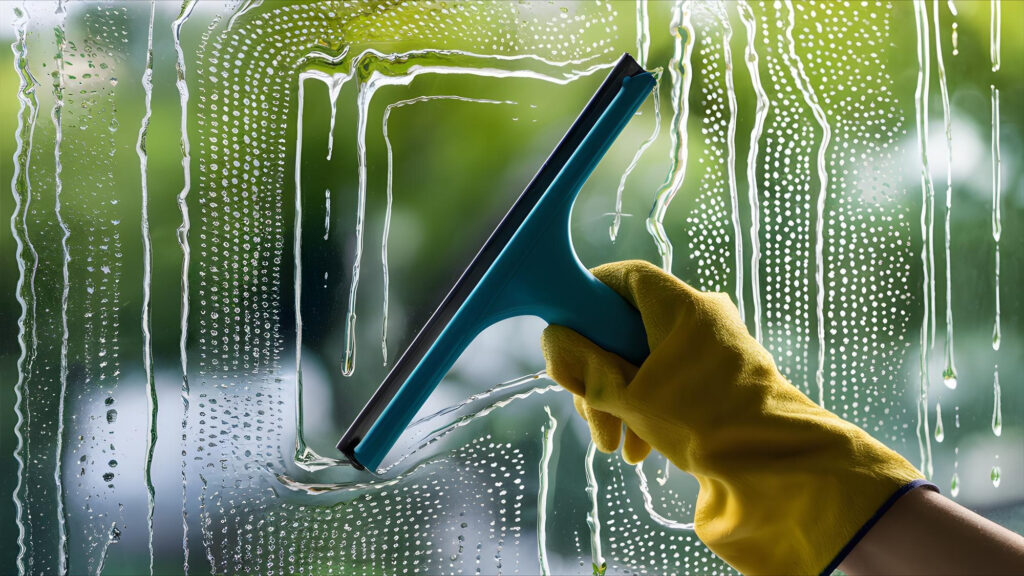
- Finish with a squeegee in straight overlapping strokes from top to bottom. Follow with a dry microfiber cloth on edges and corners.
Clean all window frames, sills, and tracks at the same stage. These areas hold heavy concentrations of dust that will recontaminate the glass if left unaddressed.
Problem 7: Restoring floors and surfaces after construction
Floors take the most punishment during a renovation. Foot traffic, dropped tools, spills, and adhesive residue from protective coverings all leave marks. Restoring them is often the last stage of a post-construction clean, and the most satisfying, but it requires the right technique for each material.
Floor restoration by material
- Hardwood: Remove adhesive residue with a plastic scraper, then clean with a barely damp microfiber mop and a pH-neutral cleaner. If construction traffic has dulled the finish, a professional buff and recoat restores it without a full resand.
- Tile: Damp-mop with a grout-safe cleaner, then scrub grout lines with a stiff brush. Seal grout immediately after cleaning to protect it going forward.
- Laminate and vinyl: Use a barely damp mop and a laminate-safe cleaner. Avoid steam mops entirely. Heat and moisture cause seams to lift and vinyl to bubble on new installations.
- Concrete: Sweep with a dust-trapping compound first, then damp-mop with a concrete-safe cleaner. Address paint drips, caulk splatter, and adhesive residue before the final mop.
Surface restoration beyond floors
Work through each surface methodically rather than rushing a single pass across the room:
- Baseboards and trim: Wipe with a damp microfiber cloth. Touch up any paint chips with leftover contractor paint before sealing the surface.
- New cabinetry: Wipe interior and exterior surfaces with a barely damp cloth. Remove protective film by pulling it parallel to the surface to avoid leaving adhesive residue.
- Countertops: pH-neutral stone cleaner for granite and marble, mild soap for laminate, food-grade mineral oil for butcher block. Avoid general-purpose cleaners on any new installation.
When to hire professional post-construction cleaning services
Some renovations are manageable as a DIY cleanup. Others are not. Consider hiring professionals when:
- The renovation covered more than one room
- Drywall, insulation, or concrete work was involved
- New surfaces need specific product knowledge to protect
- The HVAC system requires duct cleaning
Martha’s Vineyard homeowners face specific challenges after a renovation. Salt air accelerates corrosion on new fixtures. Hard water leaves deposits on freshly installed glass and tile. Tight seasonal schedules often mean little time between construction completion and occupancy.
ICP Cleaning Services provides post-construction cleaning for kitchens, bathrooms, and full-home renovations across all Martha’s Vineyard communities. Our team follows a structured checklist that protects every new surface and removes construction contaminants correctly the first time.
For ongoing maintenance after the post-construction clean, our deep cleaning service keeps your renovated spaces in top condition through every season.
Frequently asked questions about post-construction cleaning
How long does post-construction cleaning take? It depends on the size of the renovation. A single-room remodel typically takes 4 to 6 hours. A full-home renovation can take 1 to 2 full days. The scope of debris, the number of new surfaces, and whether the HVAC needs attention all affect the timeline.
Can I use regular cleaning products after a renovation? For most new surfaces, no. Regular products often contain acids, solvents, or abrasives that damage fresh grout, new stone, or recently finished floors. Always match the product to the specific surface material.
How many times do I need to vacuum after construction? Plan for at least two full passes with a HEPA vacuum. Construction dust settles in waves over several days. A single pass captures the visible layer but misses particles that are still airborne and will resettle within hours.
Do I need professional duct cleaning after a renovation? For major renovations involving drywall, concrete, or insulation work, yes. Construction dust infiltrates ductwork deeply and standard vacuuming cannot remove it. A contaminated system keeps recirculating fine particles long after visible dust is gone.
What is the biggest mistake homeowners make during post-construction cleanup? Cleaning in the wrong order. Vacuuming floors before wiping walls and ceilings means the floors fill with debris again immediately. Always work top to bottom, and replace HVAC filters before running the system at all.
When can I move furniture back in after post-construction cleaning? Wait until at least two full cleaning passes are complete and the air has settled. For rooms with fresh paint, wait a minimum of 24 to 48 hours after the final clean before moving heavy furniture against walls.