As temperatures drop and windows close, workplaces inevitably become tighter ecosystems where air is recycled and surfaces are shared more frequently. Consequently, the arrival of winter signals a critical need to shift from standard maintenance to a more defensive hygiene strategy.
This seasonal transition is exactly why professional office cleaning services become a cornerstone of operational stability during flu season. By implementing consistent sanitization protocols, businesses can effectively disrupt the chain of transmission and protect their most valuable asset—their people.
The Mechanics of Transmission: Why Winter is Different
Flu season isn’t just about lower temperatures; it is about how human behavior and building physics change during colder months. Because people spend significantly more time indoors, the density of occupants in shared zones increases, creating a perfect storm for cross-contamination.
Reliable office cleaning services understand that winter viruses, such as influenza and norovirus, are notoriously resilient on hard surfaces. For instance, the flu virus can survive on desks and doorknobs for up to 24 hours, waiting for the next person to make contact. Therefore, a cleaning schedule that worked in July is often insufficient for January.
Effective office cleaning services address these winter-specific risks by:
- Increasing the frequency of disinfection in high-traffic zones.
- Using EPA-registered products specifically tested for cold-weather pathogens.
- Targeting “incidental contact” areas that are often overlooked in warmer months.
- Managing the influx of outdoor contaminants like mud and salt that degrade indoor air quality.
Strategic Focus Zones for Office Cleaning Services
To maximize the impact of your hygiene strategy, it is essential to identify where germs actually congregate. While floors and windows impact aesthetics, the true battleground for winter wellness lies on the surfaces that hands touch most often.
Professional office cleaning services prioritize these “hotspots” to break the cycle of infection. Moreover, focusing on these areas provides a higher return on investment regarding employee health and safety.
The “Touch-Transfer” Chain
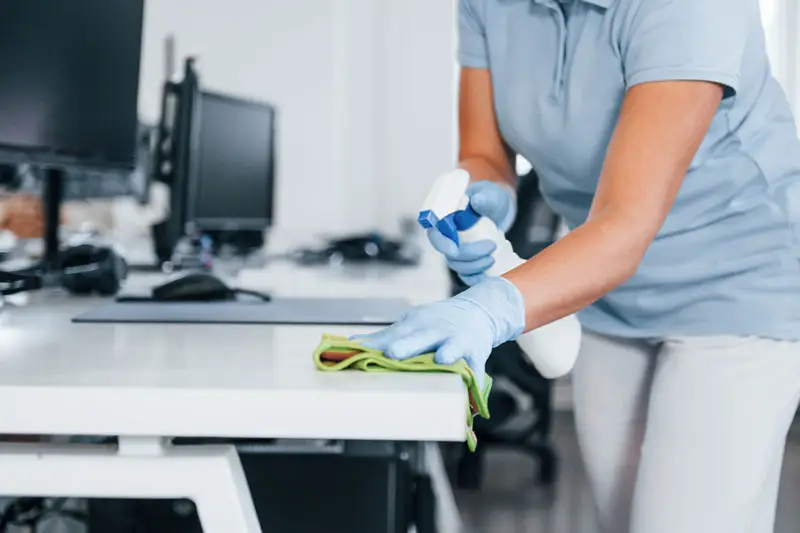
The average office worker touches their face roughly 16 times an hour, often immediately after touching a communal surface. If that surface is contaminated, the risk of infection spikes instantly. Competent office cleaning services disrupt this chain by rigorously sanitizing:
- Elevator buttons and stairwell railings.
- Door handles, push plates, and security badge readers.
- Shared printer touchscreens and copier interfaces.
- Light switches and thermostat controls.
- Reception desk counters and visitor sign-in pens.
The Breakroom Battlefield
The breakroom is arguably the most vulnerable space in any facility during flu season. Because this is where food is consumed and masks (if worn) are removed, the potential for direct transmission is highest here. Furthermore, moisture around sinks and coffee machines creates an ideal breeding ground for bacteria.
Your office cleaning services should implement a strict protocol for breakrooms that goes beyond wiping up crumbs. This includes:
- Disinfecting refrigerator handles and microwave buttons daily.
- Sanitizing coffee pot handles and water cooler levers.
- Deep cleaning sink faucets and sponge holders.
- Wiping down table edges and chair backs where hands naturally rest.
Cleaning vs. Sanitizing vs. Disinfecting
One of the most common misconceptions in facility management is that these three terms are interchangeable. However, for office cleaning services operating during flu season, the distinction is a matter of safety and compliance.
Understanding these differences ensures that you are asking for—and receiving—the right level of care from your service provider.
The Hierarchy of Hygiene
- Cleaning: This is the physical removal of dirt, dust, and organic matter. While it improves appearance, it does not necessarily kill germs. Effective office cleaning services always start here because disinfectants cannot work on dirty surfaces.
- Sanitizing: This process lowers the number of germs to a safe level as defined by public health standards. It is typically a quick process used for food-contact surfaces.
- Disinfecting: This is the chemical process of killing 99.999% of germs on hard, non-porous surfaces. This is the gold standard for flu prevention.
The Importance of Dwell Time
A critical failure point in amateur cleaning is wiping a disinfectant away too quickly. Professional office cleaning services are trained on “dwell time”—the specific amount of time a product must remain wet on a surface to be effective. If a product requires a ten-minute dwell time but is wiped dry in ten seconds, it has done little to stop the flu virus. Therefore, patience and technique are just as important as the chemicals used.
The Role of Security and Trust in Maintenance
Inviting a cleaning crew into your facility requires a high level of trust, especially when sensitive data or valuable equipment is present. This is particularly true for the “Massachusetts Standard” of business, where pragmatism and security are paramount.
When evaluating office cleaning services, the vetting process is just as crucial as the cleaning process. You need to know that the individuals entering your space after hours are background-checked, insured, and professionally trained.
Security Protocols to Look For
Reliable office cleaning services should operate as an extension of your own security team. This means they adhere to strict protocols regarding:
- Access Control: Ensuring keys and access cards are tracked and never shared.
- Alarm Systems: Proper training on arming and disarming building security.
- Uniforms and ID: Staff should be easily identifiable to maintain a sense of safety.
- Confidentiality: A clear understanding that papers left on desks are never to be read or disturbed.
By prioritizing office cleaning services that value security, you protect your business from risks that go beyond just the flu.
Managing Winter Debris: Salt, Sand, and Slush
Winter wellness is not solely about viruses; it is also about maintaining a safe and healthy physical environment. In regions with harsh winters, tracked-in salt, sand, and melting snow can wreak havoc on office floors and indoor air quality.
When salt dries, it becomes an airborne dust that can irritate respiratory systems, making employees more susceptible to respiratory infections. Furthermore, wet floors present an immediate slip-and-fall hazard. Comprehensive office cleaning services tackle these physical contaminants proactively.
Floor Care Strategies for Winter
To combat the influx of winter debris, office cleaning services often adjust their floor care routines to include:
- Frequent Vacuuming: Using HEPA-filter vacuums to capture fine salt dust before it becomes airborne.
- Neutralizing Rinses: Using specific pH-balancing cleaners to remove salt residue that can damage carpets and strip floor wax.
- Matting Maintenance: Regularly cleaning and rotating entryway mats to ensure they continue to trap moisture effectively.
The Psychological Impact of a Clean Office
There is a tangible psychological benefit to a visibly clean workspace, particularly when news cycles are dominated by flu statistics. When employees see that office cleaning services are regularly and thoroughly maintaining their environment, it fosters a sense of safety and care.
This “peace of mind” is a critical component of workplace culture. It signals that management values the well-being of the team, which can boost morale and reduce anxiety about returning to the office. Conversely, a dusty or neglected workspace can trigger subconscious stress, leading to lower productivity and higher dissatisfaction.
Visual Cues of Safety
Professional office cleaning services help communicate safety through visual cues. A gleaming lobby, spotless restrooms, and dust-free vents are non-verbal indicators that the building is healthy. In addition, the presence of day porters—cleaning staff who operate during business hours—can be a powerful reassurance to staff that hygiene is a continuous priority.
Reducing Absenteeism Through Hygiene
The cost of the flu is measured not just in tissues, but in lost productivity. Unplanned absences disrupt project timelines, burden remaining staff, and can directly impact revenue. Investing in high-quality office cleaning services is, therefore, a pragmatic financial decision.
By reducing the viral load in the office, you statistically lower the probability of widespread illness sweeping through a department. While no cleaning regimen can guarantee zero illness, professional office cleaning services significantly mitigate the risk of workplace outbreaks.
The Ripple Effect of Prevention
When one employee avoids getting sick because a doorknob was properly disinfected, the benefit ripples outward. They don’t take the virus home to their family, and they don’t pass it to their colleagues. This containment is the ultimate goal of winter-focused office cleaning services. It supports business continuity in a season known for disruption.
Choosing the Right Partner for Winter Wellness
Not all cleaning companies are equipped to handle the specific demands of flu season. Selecting the right provider for office cleaning services requires looking beyond the lowest price bid. You need a partner who understands the science of sanitization and the specific needs of your facility type.
Questions to Ask Potential Providers
To ensure you are getting the “Massachusetts Standard” of service—reliable, secure, and thorough—consider asking the following questions:
- What specific disinfectants do you use, and are they EPA-registered for influenza and norovirus?
- How do you train your staff on dwell times and cross-contamination prevention?
- What are your security protocols for key management and after-hours access?
- Can you provide proof of insurance and background checks for your team?
- Do you have a specific winter protocol for salt and moisture management?
Transparent office cleaning services will welcome these questions and provide clear, documented answers.
Implementation: Creating a Collaborative Hygiene Culture
While office cleaning services do the heavy lifting, maintaining a healthy workplace is a shared responsibility. The most effective strategy involves collaboration between the cleaning crew and the office staff. Simple behavioral changes can amplify the effectiveness of professional cleaning.
Tips for Employee Participation
Encouraging small habits can make a big difference. For example:
- Desk Policy: Ask employees to clear their desks of clutter at the end of the day. This allows office cleaning services to wipe down the entire surface rather than just cleaning around stacks of paper.
- Hand Hygiene: Place sanitizer stations near high-touch areas like elevators and printers.
- Stay Home Protocol: Reinforce that staying home when sick is a responsibility, not a weakness.
- Tech Hygiene: Provide wipes for employees to clean their personal keyboards and mice, which cleaning crews often avoid to prevent accidental damage.
The Long-Term Value of Consistent Care
Treating office cleaning as a variable expense to be cut when budgets are tight is a risky strategy. Inconsistent cleaning leads to a buildup of grime and pathogens that is much harder to reverse later. Reliable office cleaning services provide a baseline of cleanliness that protects the facility’s materials and the occupants’ health year-round.
During winter, this consistency is your primary defense. It ensures that even when flu activity peaks in the community, your office remains a fortress of relative safety. The investment in professional office cleaning services pays dividends in the form of a healthier, more present, and more productive workforce.
Adapting to Modern Office Layouts
Modern offices, with their open floor plans and hot-desking models, present unique challenges for hygiene. In these environments, a single desk might be used by three different people in a week. This reality makes the role of office cleaning services even more critical.
Cleaning providers must adapt their workflows to account for these shared spaces. This might mean shifting focus from deep cleaning private offices to aggressive disinfection of communal workbenches and phone booths. Flexible office cleaning services will analyze your specific layout and traffic patterns to deploy their resources where they are needed most.
The Environmental Aspect of Disinfection
There is often a concern that increased disinfection means increased exposure to harsh chemicals. However, modern office cleaning services have access to advanced products that are tough on viruses but gentle on people and the environment.
Many effective disinfectants are now based on accelerated hydrogen peroxide or other biodegradable compounds. These products break down into harmless water and oxygen after doing their job. Prioritizing office cleaning services that use responsible chemistry ensures that you aren’t trading a biological hazard for a chemical one.
The Snow-Day Standard: A Secure Path Forward
Winter wellness is rarely achieved through a single dramatic action. Instead, it is the result of a pragmatic, steady combination of correct methods, consistent schedules, and attention to high-touch reality. When flu season peaks, professional office cleaning services play an outsized role because they target the shared environment everyone depends on.
Ultimately, choosing the right partner means finding a team that values security and reliability as much as you do. By leveraging expert office cleaning services that focus on touchpoints, dwell time, and repeatable routines, you help reduce preventable exposures. This ensures your workplace can function smoothly and securely through the hardest months of the year.