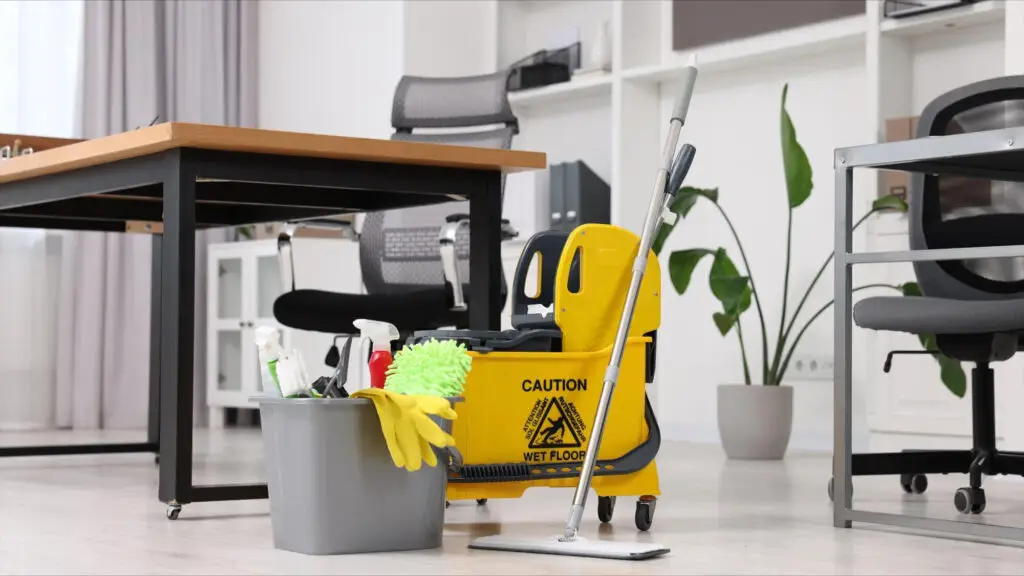
Commercial cleaning is not simply a larger version of home cleaning. The standards are different, the risks are higher, and the consequences of getting it wrong are far more visible. A dirty or poorly maintained commercial space affects staff productivity, customer impressions, health inspection outcomes, and your business reputation simultaneously. Effective commercial cleaning requires the right products, the right frequency, and a systematic approach that leaves nothing to chance. On Martha’s Vineyard, commercial businesses face seasonal extremes that intensify every cleaning challenge. The summer tourist season brings peak foot traffic, high humidity, and salt air. The off-season brings closures, moisture buildup, and the need for thorough preparation before reopening. This guide covers 12 of the most common commercial cleaning problems — with proven, practical solutions for each one.
Fix #1: High-Touch Surfaces That Spread Bacteria
High-touch surfaces are the highest-risk area in any commercial cleaning program. Door handles, reception counters, card terminals, elevator buttons, light switches, and shared equipment accumulate bacteria rapidly — and transfer them directly to the hands of every person who uses them. In a commercial environment, where dozens or hundreds of people interact with the same surfaces each day, inadequate attention to high-touch areas creates a genuine public health risk. High-touch surface commercial cleaning protocol
- Frequency matters above all else: High-touch surfaces must be disinfected at a minimum twice daily — once at opening and once at midday. In high-footfall businesses during peak season, three to four disinfection passes per day is the professional standard.
- EPA-registered disinfectants: Use only EPA-registered disinfectants for commercial cleaning of shared surfaces. These products are tested and certified to eliminate the specific pathogens present in commercial environments. Consumer-grade products are not formulated to the same standard.
- Contact time discipline: Apply the disinfectant and allow the full dwell time specified on the label before wiping. Wiping immediately after application is the single most common commercial cleaning error — and it renders the disinfectant largely ineffective.
- Electrostatic spraying: For large commercial spaces or high-volume disinfection requirements, electrostatic sprayers coat surfaces with charged disinfectant particles that wrap around every surface — including the sides and undersides of objects that hand-wiping consistently misses.
- Written cleaning log: Maintain a documented cleaning log for all high-touch areas. A log demonstrates due diligence to health inspectors and provides a record of cleaning frequency that protects the business in the event of a health complaint.
Fix #2: Commercial Restroom Hygiene and Odor
Commercial restrooms are the most scrutinized area of any business by customers and inspectors alike. A poorly maintained restroom communicates neglect regardless of how clean the rest of the space is. Odors are the most immediate signal of inadequate commercial cleaning — and they are almost always a symptom of a deeper hygiene issue rather than a ventilation problem. Commercial restroom cleaning approach
- Full clean twice daily minimum: In a commercial environment with regular customer or staff use, restrooms require a complete clean at opening, a midday refresh, and a closing clean. The midday refresh should include wiping fixtures, restocking supplies, and checking for odors at minimum.
- Odor source identification: Persistent restroom odors in a commercial space indicate untreated grout or caulk around the toilet base, blocked drain buildup, or a failing wax seal beneath the toilet. No amount of surface commercial cleaning will resolve these odors — the source must be addressed directly.
- Grout and caulk maintenance: Scrub grout lines weekly with a grout-specific cleaner. Replace caulk around toilet bases and fixtures at the first sign of discoloration or separation. These are the primary odor and bacteria reservoirs in any business restroom.
- Touchless fixtures: Where possible, install touchless soap dispensers, faucets, and hand dryers. Touchless fixtures dramatically reduce cross-contamination between users and reduce the commercial cleaning burden on high-touch fixture surfaces.
- Drain maintenance: Pour enzymatic drain cleaner down every restroom drain weekly. Enzymatic products break down the organic matter causing odors at the biological source. Chemical drain cleaners only clear blockages and do not address the bacterial contamination causing the smell.
Fix #3: Commercial Floor Maintenance and Restoration
Floors are the most visible and most demanding element of any commercial cleaning program. High foot traffic, tracked-in dirt, spills, and general wear accumulate rapidly in a commercial environment. The floor type determines the cleaning approach — and using the wrong method on the wrong material is one of the most common and most costly commercial cleaning mistakes. Floor cleaning by commercial surface type
- Hard vinyl and LVT floors: Damp-mop daily with a pH-neutral commercial cleaner. Avoid excessive water — oversaturation seeps into seams and causes adhesive failure. Strip and reseal vinyl floors every six to twelve months depending on foot traffic volume.
- Commercial tile and grout: Mop with a commercial-grade tile cleaner, then scrub grout lines with a mechanical floor scrubber or stiff brush weekly. Grout in commercial spaces absorbs contamination rapidly. Seal all grout after deep cleaning and reseal annually.
- Commercial carpet: Vacuum daily with a commercial-grade vacuum. Spot-treat stains immediately — allowing stains to set in commercial carpet requires professional hot water extraction to remove. Schedule a full extraction clean every three to six months depending on traffic.
- Hardwood and timber floors: Damp-mop with a hardwood-safe commercial cleaner only. Never use steam or excessive water on commercial hardwood. Buff annually and refinish every two to three years to maintain the protective finish under commercial foot traffic.
- Entrance matting: Maintain high-quality entrance matting at all exterior doors. Quality matting captures the majority of dirt and moisture before it reaches interior floors, dramatically reducing the cleaning burden and extending the life of all interior floor surfaces.
Fix #4: Commercial Kitchen and Food Service Cleaning
Commercial kitchens operate under health code requirements that define minimum cleaning standards for every surface, appliance, and utensil. Failing to meet these standards during a health inspection results in notices, fines, or closure — consequences that no Martha’s Vineyard food service business can afford during peak season. Commercial cleaning for food service environments requires daily deep cleaning of certain areas, not weekly. Food service commercial cleaning priorities
- Cooking surface degreasing: Stovetops, griddles, fryers, and range hoods accumulate grease with every service. Degrease all cooking surfaces after every service session. Grease buildup is a fire risk as well as a health code violation — it is the leading cause of commercial kitchen fires.
- Range hood filters: Remove and soak range hood filters in hot water with a commercial degreaser after every service or at minimum daily. Grease-saturated filters fail health inspections and are a serious fire hazard. This is a non-negotiable step in any food service commercial cleaning program.
- Walk-in refrigerator and freezer: Clean all shelving, walls, and floor drains in walk-in units weekly. Spills and organic matter in cold storage create mold and bacterial contamination that spreads to food products. Check door seals weekly for mold and replace deteriorated gaskets immediately.
- Floor drains: Scrub and flush all kitchen floor drains daily. Kitchen drains accumulate grease, food particles, and bacteria rapidly. Blocked or contaminated drains are among the most common health code violations found during commercial kitchen inspections.
- Food contact surfaces: Sanitize all food contact surfaces — cutting boards, prep tables, and utensil storage — after every use session using an NSF-approved food-contact sanitizer. This is distinct from general commercial cleaning and must meet specific concentration and contact time requirements.
Fix #5: Reception Areas, Lobbies, and Customer-Facing Spaces
The reception area or lobby of any commercial space forms the first impression for every customer, guest, or client who enters. In a commercial cleaning context, these spaces require a higher standard of visible cleanliness than back-of-house areas — because every person who visits the business forms an immediate judgment about the entire operation based on what they see and smell at the entrance. Customer-facing area cleaning standards
- Daily surface wipe-down: Wipe all reception counters, display surfaces, seating arms, and glass partition panels daily. Use a commercial glass cleaner on glass surfaces and an appropriate surface cleaner on reception counters. These are the surfaces customers touch and examine most closely.
- Entry floor and matting: Sweep and damp-mop entry floors at opening and again at midday during peak season. On Martha’s Vineyard, summer foot traffic tracks sand, salt, and moisture into commercial spaces constantly. An unaddressed entry floor signals poor standards immediately.
- Glass doors and windows: Clean all customer-facing glass doors and windows daily during business hours. Salt air and fingerprints create a rapid film on commercial glass in coastal environments. Crystal-clear glass signals a well-maintained space and maximizes natural light inside.
- Seating and soft surfaces: Vacuum upholstered seating daily. Spot-clean any staining immediately. Include all lobby soft surfaces in the monthly commercial cleaning deep clean schedule — upholstered surfaces in customer-facing areas accumulate significant contamination that routine vacuuming does not address.
- Odor management: The reception area should smell clean and neutral at all times. Any ambient odor in a commercial reception space is immediately noticed by new arrivals. Identify and eliminate odor sources — do not mask them with air fresheners, which guests associate with attempting to cover up a problem.
Fix #6: Indoor Air Quality in Commercial Spaces
Indoor air quality in a commercial space directly affects staff performance, customer comfort, and health inspection outcomes. Dust, mold spores, volatile organic compounds from cleaning products, and HVAC contamination all degrade the air quality in commercial environments — and are rarely addressed by standard commercial cleaning routines. Air quality as part of commercial cleaning
- HVAC filter replacement: Replace all HVAC filters on a monthly schedule during peak season and every two months during the off-season. Commercial spaces generate far more airborne particulate than residential environments — dirty filters redistribute this contamination continuously.
- Duct inspection: Schedule a professional duct inspection and cleaning annually. Commercial ductwork accumulates significant debris over a full operating season. On Martha’s Vineyard, the combination of salt air and high summer occupancy creates duct contamination faster than in most inland commercial environments.
- Exhaust ventilation: Clean all commercial exhaust fans and ventilation covers monthly. Clogged commercial ventilation drives humidity upward, increases mold risk, and reduces the effectiveness of every other commercial cleaning effort in the space.
- Volatile organic compound reduction: Switch to low-VOC cleaning products wherever possible. Many conventional cleaning chemicals release VOCs that degrade air quality for hours after use. Low-VOC products deliver equivalent performance without the indoor air quality impact.
- Green cleaning protocols: Consider adopting a certified green commercial cleaning program. Green cleaning protocols use environmentally certified products and processes that reduce chemical exposure for staff and customers — a growing expectation among customers and employees on Martha’s Vineyard.
Fix #7: Commercial Upholstery and Soft Furnishing Maintenance
Commercial upholstery — lobby seating, dining chairs, waiting room furniture, and booth seating — absorbs contamination from every person who uses it. In a busy commercial environment, this accumulation is significant and rapid. Daily vacuuming maintains surface appearance, but it never removes the embedded dirt, oils, and allergens that accumulate within the fabric. A professional commercial cleaning extraction schedule for all soft furnishings is essential. Commercial upholstery cleaning schedule
- Daily vacuuming: Vacuum all upholstered surfaces every day during operation. Use a commercial vacuum with an upholstery attachment to remove surface debris, hair, and crumbs before they embed deeper into the fabric.
- Spot treatment protocol: Train all commercial cleaning staff to spot-treat stains immediately when they occur. Fresh stains are far easier to remove than set stains. Keep a commercial-grade spot treatment spray accessible in every public area of the business.
- Quarterly extraction clean: Schedule a professional hot water extraction clean of all commercial upholstery every three months during peak season. This removes the embedded contamination, allergens, and odors that routine vacuuming cannot address.
- Fabric protection reapplication: After each professional extraction clean, apply a commercial fabric protector to all upholstered surfaces. This creates a barrier that repels spills and slows the rate of dirt embedding between commercial cleaning sessions.
- End-of-season deep clean: Before closing for the off-season or before a major seasonal change in occupancy, complete a full professional clean of all soft furnishings. Storing or closing a commercial space with contaminated upholstery allows odors and mold to develop during the closed period.
Fix #8: Commercial Window and Glass Cleaning
Commercial glass — display windows, entry doors, interior partitions, and mirrors — is a direct reflection of your business standards. Salt film from coastal air, fingerprints, and condensation accumulate rapidly on commercial glass in Martha’s Vineyard’s environment. Commercial cleaning for glass surfaces requires daily attention to customer-facing glass and a scheduled weekly or bi-weekly service for all other glass in the space. Commercial glass cleaning routine
- Exterior display windows: Clean exterior commercial glass daily during business hours in summer. Salt air deposits an invisible film on exterior glass overnight that creates a dull, hazy appearance in morning light. A daily exterior wipe with a degreaser and streak-free glass cleaner takes minutes and makes a significant visual impact.
- Entry door glass: Clean entry door glass at opening and again at midday. Entry doors accumulate fingerprints and smears at the highest rate of any glass surface in a commercial space — and they are the most closely scrutinised by arriving customers.
- Interior partitions and mirrors: Clean interior glass partitions and mirrors weekly as part of the standard commercial cleaning schedule. Use a two-stage approach — damp cloth first to remove the surface film, then glass cleaner with a microfiber cloth for a streak-free finish.
- Salt film treatment: For commercial properties with significant ocean exposure, apply a hydrophobic glass coating to all exterior glass quarterly. This coating causes salt spray and rain to bead and run off rather than drying and bonding to the surface — significantly reducing the daily commercial cleaning burden.
Fix #9: Persistent Commercial Odors
Odors are one of the most damaging problems a commercial space can have — and one of the most frequently mismanaged. Masking commercial odors with air freshener is consistently the wrong approach. It creates an artificial scent that experienced customers associate with concealment, and it does nothing to address the underlying source. Effective commercial cleaning eliminates odors at their origin. Identifying and eliminating commercial odors
- Drain buildup: Floor drains, sink drains, and mop sink drains are the most common source of background odors in commercial spaces. Pour enzymatic drain cleaner down all commercial drains weekly. The enzymes break down the organic matter generating the odor rather than simply masking or flushing it.
- Mop water management: Dirty mop water is a leading cause of commercial odors that are attributed to the floor surface rather than the cleaning process. Change mop water frequently during cleaning sessions and never allow used mop water to sit in a bucket overnight. A clean mop applied with dirty water spreads contamination rather than removing it.
- Waste station hygiene: Clean all commercial waste bins, recycling containers, and compactor areas weekly. Commercial waste stations generate significant odor that spreads into adjacent areas. Use commercial-grade bin liners and sanitize the interior of each bin monthly.
- HVAC odor circulation: Persistent odors in commercial spaces are frequently recirculated by the HVAC system rather than originating from the surface being cleaned. If an odor is present throughout multiple areas of the space simultaneously, the HVAC system is the primary suspect. Replace filters and inspect ducts as a priority step.
- Soft surface absorption: Upholstered seating, curtains, and carpet absorb and retain odors from any busy environment. If surface cleaning fails to resolve a persistent odor, the soft surfaces in the space require professional extraction cleaning to remove the absorbed contamination.
Fix #10: Post-Event Commercial Cleaning
Commercial spaces that host events — restaurant private dining, hotel function rooms, retail pop-ups, and hospitality venues — face their most intensive cleaning demands in the hours immediately following an event. Post-event commercial cleaning must be rapid, thorough, and systematic to prepare the space for the next use. On Martha’s Vineyard, where summer events are frequent and turnaround times are tight, a well-planned post-event clean is essential. Post-event commercial cleaning sequence
- Clear and sort first: Remove all waste, glassware, and equipment before beginning any surface cleaning. Attempting to clean around remaining items produces an inconsistent result and increases the time required for the commercial cleaning session overall.
- Floor treatment: Sweep and mop all hard floors immediately after clearance. Post-event floors accumulate food debris, drink spills, and significant tracked-in contamination that hardens and stains if left overnight. Address carpet with a commercial vacuum and spot-treat any staining before it sets.
- Surface disinfection: Wipe and disinfect all tables, chairs, bar surfaces, and food service areas with commercial-grade disinfectant. Allow full dwell time before wiping. Post-event surface disinfection is both a hygiene requirement and a health code obligation for food service venues.
- Restroom reset: Complete a full restroom clean immediately after event guests leave. Post-event restrooms require a full treatment — not simply restocking supplies. Tile, fixtures, floors, and all touch points must be cleaned and disinfected before the next occupancy.
- Ventilation and odor reset: Run all ventilation at maximum for 30 minutes after the event cleaning is complete. This removes residual food and beverage odors before the space is used again. In enclosed commercial spaces, poor post-event ventilation allows odors to absorb into walls and soft furnishings overnight.
Fix #11: Seasonal Commercial Cleaning for Martha’s Vineyard Businesses
Martha’s Vineyard’s seasonal business cycle creates commercial cleaning demands that are unlike those faced by year-round mainland businesses. The transition from off-season closure to peak-season operation — and back again — requires a comprehensive commercial cleaning strategy at each end of the season. A business that opens for summer without a thorough pre-season commercial cleaning starts the busiest and most commercially critical period of the year at a disadvantage. Seasonal commercial cleaning transitions
- Pre-season opening clean: Before opening for the summer season, complete a full commercial cleaning of every area of the space. This includes HVAC filter replacement, deep cleaning of all floor surfaces, restroom restoration, kitchen appliance cleaning, window and glass cleaning, and an inspection for any mold or moisture damage that developed during the closed winter period.
- Peak-season maintenance rhythm: During summer peak season, increase commercial cleaning frequency across all areas. High tourist foot traffic, salt air, and extended operating hours all accelerate contamination beyond what a standard year-round cleaning schedule can address effectively.
- Post-season closing clean: At the end of the season, complete a thorough commercial cleaning before closing. Closing a commercial space with contamination in place — grease in the kitchen, moisture in the restrooms, or organic matter in drains — guarantees that problems will compound during the closed period and require significantly more remediation in spring.
- Mid-closure inspection: For properties closed for more than two months, schedule a brief mid-closure inspection and clean. Check for mold development, moisture intrusion, and pest activity. Addressing any developing issues mid-closure is far less costly than discovering them at the pre-season opening commercial cleaning.
Fix #12: Building a Commercial Cleaning Schedule That Actually Works
The most common cause of commercial cleaning failure is not technique — it is inconsistency. A commercial cleaning program that is thorough one week and superficial the next produces cumulative contamination that regular maintenance cannot keep up with. Building a documented, scheduled commercial cleaning program is the foundation of a genuinely clean commercial space. Commercial cleaning schedule framework
- Daily tasks: High-touch surface disinfection, restroom full clean, floor sweeping and mopping, kitchen surface degreasing, waste removal, entry area clean, and customer-facing glass wipe-down. These tasks cannot be deferred — daily attention to these areas is a hygiene requirement, not a preference.
- Weekly tasks: Grout scrubbing, drain enzymatic treatment, HVAC filter check, deep kitchen appliance clean, full upholstery vacuum, window and glass deep clean, waste bin sanitization, and storage area clean. Weekly tasks maintain the standard between the daily sessions.
- Monthly tasks: Professional carpet or floor extraction, HVAC duct inspection, range hood deep clean, walk-in refrigerator and freezer clean, full restroom grout and caulk treatment, and exterior surface wash. Monthly commercial cleaning tasks address the accumulation that daily and weekly routines cannot fully prevent.
- Quarterly tasks: Professional upholstery extraction, hydrophobic glass coating application, grout resealing on all tile floors and walls, a full audit to assess any developing issues, and review of the cleaning product inventory to ensure all products remain within certification and effectiveness dates.
- Annual tasks: Full duct cleaning, HVAC system service, floor stripping and resealing, professional mold inspection, exterior pressure washing, and a comprehensive program review that assesses standards against the evolving needs of the business and updates the schedule accordingly.
Your Business Deserves a Commercial Cleaning Standard That Protects Everyone
Commercial cleaning is not a back-office function — it is a direct expression of how your business values the people inside it. Staff who work in a genuinely clean environment are healthier, more productive, and more satisfied. Customers who enter a clean, well-maintained commercial space trust the business more and return more often. A rigorous commercial cleaning program protects your reputation, your health inspection record, and every person who walks through your door. ICP Cleaning Services provides professional commercial cleaning for businesses across all Martha’s Vineyard communities — from Edgartown and Vineyard Haven to Aquinnah, Oak Bluffs, West Tisbury, and Chilmark. We understand the specific demands of island commercial operations: the intensity of the summer season, the challenges of the coastal environment, and the need for a commercial cleaning partner who is reliable, thorough, and genuinely invested in the success of your business. Apply these 12 fixes systematically. Build a commercial cleaning schedule that reflects the real demands of your space and your season. And when the scope of the work — or the standard required — calls for a professional team, trust ICP Cleaning Services to deliver a result that protects your business, your customers, and your staff every single day.