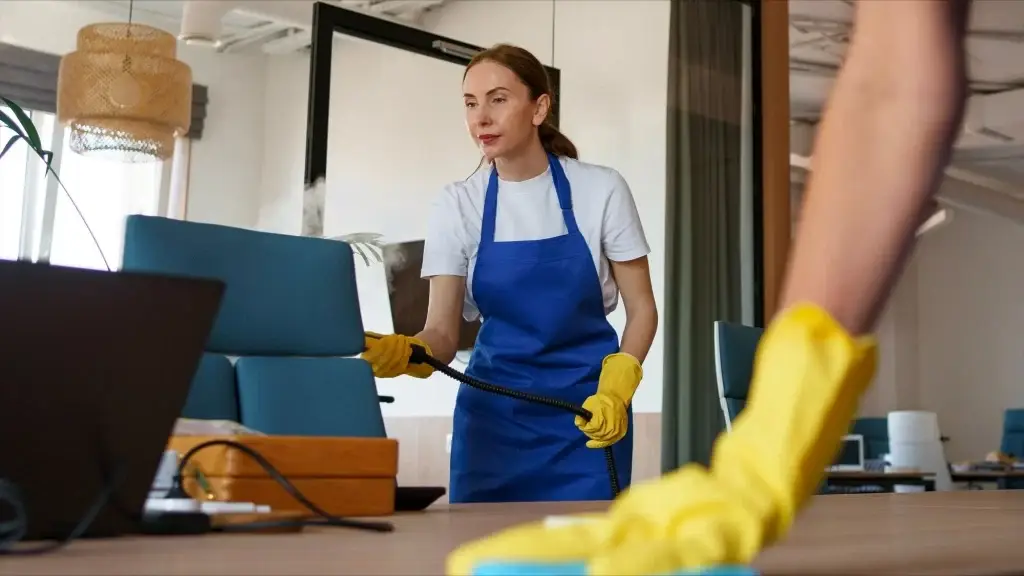
Running a small business leaves little room for logistics that slow things down. Cleaning is necessary, but scheduling it during business hours creates friction: noise, disruption, wet floors, and cleaning equipment in spaces customers are using. After hours commercial cleaning eliminates all of that.
The cleaning happens after your last employee leaves and finishes before your first one arrives. Your team walks in every morning to a clean, ready workspace. Your clients never see a mop bucket in the hallway. And your operations run without interruption.
What is after hours commercial cleaning?
After hours commercial cleaning is professional janitorial service performed outside of regular business hours, typically overnight or in the early morning before opening. It covers the same scope as standard commercial cleaning: offices, restrooms, breakrooms, reception areas, and floors. The difference is timing, and that timing changes how thoroughly the work gets done.
A complete after hours commercial clean typically includes:
- Vacuuming and mopping all floor surfaces
- Sanitizing restrooms, fixtures, and high-touch surfaces
- Cleaning and restocking breakrooms and kitchen areas
- Wiping down desks, counters, and shared workstations
- Emptying trash and recycling throughout the facility
- Cleaning glass surfaces, entry doors, and reception areas
- Spot-cleaning walls, baseboards, and light switches
1. Zero disruption to your operations
The most immediate benefit is simple: the cleaning happens when nobody is there. No vacuum noise during client calls. No wet floor signs in the middle of your showroom. No cleaning crew navigating around employees who are trying to work.
Even well-managed daytime cleaning creates friction. Customers encounter equipment. Employees adjust their movements. The space looks mid-maintenance rather than ready. For client-facing businesses especially, that impression matters.
After hours commercial cleaning removes that friction entirely. Every hour your business is open, the space looks its best, because all the maintenance happened while the doors were closed.
2. A better clean, every time
When cleaning happens during business hours, there are always compromises. Occupied desks get skipped. Floors cannot be fully mopped while people are walking on them. Restrooms have to be cleaned quickly between uses. These constraints are practical, but they limit results.
Cleaning in an empty facility has no such limits. Every desk surface can be properly wiped. Every floor can be swept and mopped in its entirety. Every restroom can be thoroughly sanitized without rushing. Breakrooms can be fully cleaned rather than tidied around whoever is eating lunch.
This is why after hours commercial cleaning consistently produces better results than daytime cleaning, regardless of how skilled the team is. The empty space allows thorough work that an occupied facility structurally cannot support.
3. Employees start every day in a clean environment
There is a direct connection between workplace cleanliness and how employees feel about their work. Research from the Harvard T.H. Chan School of Public Health consistently shows that indoor environmental quality directly affects cognitive function, response times, and the ability to focus — all of which shape how employees experience their workday.
The effect is easy to observe. Employees who arrive to overflowing bins, smeared counters in the breakroom, and dusty workstations get a clear signal: this place does not take care of itself. That signal affects morale in ways that are hard to measure but easy to feel.
For small businesses where culture and team cohesion matter, that environmental signal carries weight. Consistent after hours commercial cleaning ensures employees arrive to a fresh workspace every morning, setting a positive tone before the workday begins.
4. Clients notice what you think they do not
Before a client says a word, they have already formed an impression. The entry you greeted them in, the restroom they used, the meeting room they sat in: all of those spaces speak before you do.
A clean, well-maintained environment communicates professionalism, attention to detail, and genuine care. Those qualities transfer directly to how clients perceive your services. A space that looks maintained signals a business that maintains its standards across the board.
On Martha’s Vineyard, where small businesses compete on reputation and word of mouth travels fast in a close community, that impression compounds over time. After hours commercial cleaning ensures that every client who walks through your door sees the space at its best.
5. Fewer sick days and a healthier team
High-touch surfaces in shared workplaces are primary vectors for spreading illness. Door handles, light switches, shared appliances, keyboard areas, and restroom fixtures all accumulate bacteria and viral particles throughout the day.
In a small business where every team member’s presence matters, illness-related absences have real operational consequences. A professional cleaning team that disinfects high-touch surfaces thoroughly after hours significantly reduces transmission in the workplace.
This is especially important for businesses with shared kitchen or breakroom facilities, retail spaces where customers touch products throughout the day, and any operation relying on a small core team to deliver consistent service. For Martha’s Vineyard businesses during the high-pressure summer season, reducing illness-related disruptions is a genuine priority, not an abstract benefit.
6. Flexible scheduling around your actual hours
Small businesses do not all close at 5 PM. A retail shop on a busy summer street may not close until 9. A professional office may wrap at 5:30. A hospitality business may run late six nights a week.
After hours commercial cleaning works around your actual schedule. A reliable commercial cleaning service will work with you to establish a schedule that fits your operating rhythm, not a standardized template. Cleaning can happen immediately after closing, in the early morning before opening, or on a rotating basis that addresses different areas of the facility on different days.
This flexibility matters particularly for seasonal businesses. Pre-season deep cleaning, peak-season maintenance, and end-of-season closeout cleaning all serve different purposes. A good service partner builds a schedule around those phases rather than offering a one-size-fits-all contract.
7. Signs your current approach is no longer working
Many small businesses start by handling cleaning internally. An employee tidies up at the end of the day, or the owner takes care of it over the weekend. That works at a very early stage. But there are clear signs a business has grown beyond it:
- Cleaning tasks are regularly delayed or skipped during busy periods
- Restrooms are not consistently sanitized and stocked during the day
- Floors show visible buildup from insufficient cleaning frequency
- Employees or customers have commented on cleanliness
- The business has grown to a point where internal cleaning management is no longer realistic
When these signs appear, ad hoc effort is not the answer. Professional after hours commercial cleaning is. It removes the task from the owner’s plate, produces consistently better results, and does not require managing a cleaning schedule on top of everything else.
What to look for in an after hours commercial cleaning service
Choosing the right cleaning partner for after-hours work involves more than comparing prices. A few things matter more than cost.
Reliability. Your cleaning team has unsupervised access to your facility outside of business hours. You need a company with a proven track record, clear accountability, and a team that shows up consistently. The best services communicate proactively if something is missed or if a maintenance issue is discovered during the clean.
Customization. A good commercial cleaning service assesses your specific facility before proposing a plan. The needs of a small retail boutique are different from a professional services office, which are different from a salon or restaurant. Your service plan should reflect your actual space and use, not a generic package applied to every client.
Safe products. For businesses that serve families, children, or the general public, product safety matters. Ask about the cleaning products used and whether the service offers environmentally responsible options. A reputable team will be transparent about what they use and why.
Local knowledge. On Martha’s Vineyard, working with a locally based cleaning service means a team that understands the specific conditions of island properties: coastal humidity, seasonal occupancy patterns, and the particular demands of businesses operating in a tight-knit community.
Seasonal businesses: making the most of the off-season transition
For Martha’s Vineyard businesses on a seasonal calendar, the transition from off-season to peak season is a critical preparation window. A thorough commercial clean at the start of the season, covering accumulated dust, surfaces that have sat through winter, and moisture-prone areas, sets the right foundation for months of high-traffic operation.
After hours commercial cleaning during the pre-season period lets this work happen without consuming business hours or requiring staff time. The cleaning team can work through the facility over several evenings before the season begins, ensuring every area is ready when the doors open.
An end-of-season deep clean after closing protects the facility during off-season months. Properly cleaned surfaces and sanitized appliances deteriorate less over a closed winter period, which reduces preparation time and cost when the next season begins.
ICP Cleaning Services provides commercial cleaning for small businesses across all Martha’s Vineyard communities. For businesses that need a deeper reset between seasons, our deep cleaning service covers areas that regular maintenance does not reach.
Frequently asked questions about after hours commercial cleaning
What types of businesses benefit most from after hours commercial cleaning? Any business where daytime cleaning would disrupt customers or employees. Professional offices, retail shops, salons, medical waiting rooms, restaurants, and hospitality businesses all benefit. Essentially, any client-facing space where appearance matters and operations cannot be paused for a cleaning crew.
How often should a small business schedule commercial cleaning? Most small businesses benefit from 2 to 3 visits per week. High-traffic spaces, businesses serving food, or those with shared restrooms used by the public may need daily service. A cleaning service should assess your specific facility and recommend a frequency based on actual use, not a standard package.
Is after hours commercial cleaning more expensive than daytime cleaning? Not necessarily. In some cases it is the same price. The cost depends on the size of the facility, the scope of work, and the frequency. For many small businesses, the operational benefits, zero disruption, more thorough results, well outweigh any minor difference in cost.
What happens if something is missed or a problem is found during the clean? A reliable after hours commercial cleaning service will contact you immediately if something is missed or if a maintenance issue (a leaking pipe, a broken fixture, an unlocked door) is discovered during the clean. That kind of proactive communication is a mark of a professional team and one of the key things to ask about before signing a contract.
Do I need to be present while the cleaning team is there? No. After hours commercial cleaning is designed to work without the business owner or staff present. The team accesses the facility using keys, a key code, or a lockbox. Clear entry and exit protocols, and a verifiable track record, are essential for any after hours cleaning service.
Can cleaning frequency change by season? Yes, and it should. A seasonal business may need daily cleaning during peak summer months and weekly or biweekly service during the quieter off-season. A good commercial cleaning partner builds a flexible schedule that adjusts to your actual operating calendar rather than locking you into a fixed annual contract.