
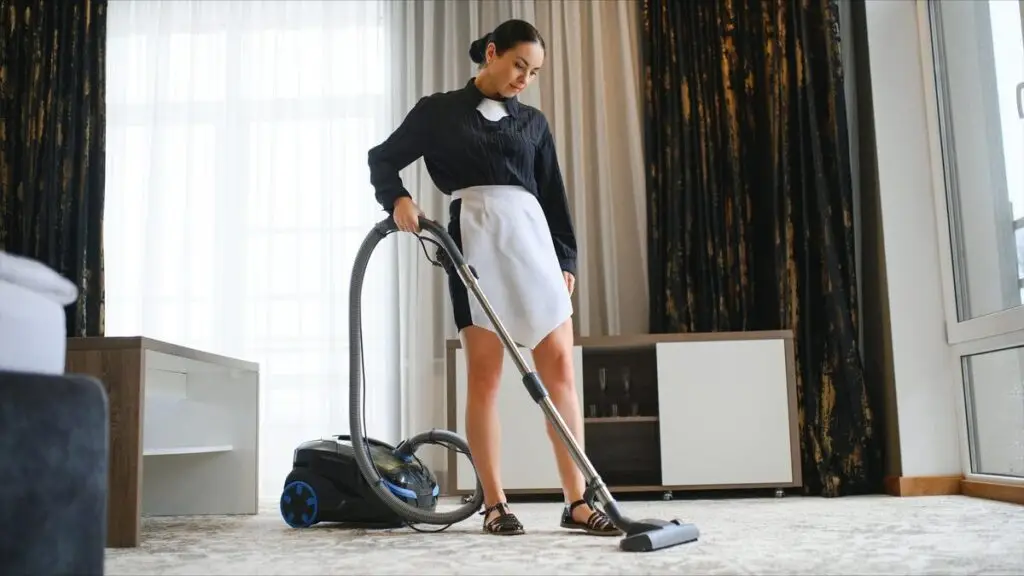
How often you vacuum your house is a question most people answer reactively, cleaning only when the floor looks dirty rather than on a consistent schedule. However, on Martha’s Vineyard, waiting until dirt is visible often means the damage to your floors and air quality is already done. Sand, salt particles, pet dander, and coastal allergens accumulate faster in island homes than in most other environments.
Understanding how often you vacuum your house based on each room’s characteristics, and the unique conditions of coastal living, helps you protect your floors, improve indoor air quality, and reduce the cleaning load over time.
Vacuuming frequency matters more in coastal homes
On Martha’s Vineyard, how often you vacuum your house should always exceed mainland frequency. Every open door or window is an opportunity for sand, grit, and salt particles to enter your home. These materials settle into carpet fibers, scratch hardwood and laminate floors, and contribute to allergen build-up that affects air quality.
Sand is particularly abrasive, which is why how often you vacuum your house matters more here than inland. When it sits on carpet or on hard floors and gets walked on, it acts like fine sandpaper against the surface beneath it. Regular vacuuming removes it before it causes wear. Additionally, dust mites, mold spores, and pet dander all accumulate faster in humid coastal environments. Answering how often you vacuum your house correctly requires a room-by-room perspective. a consistent schedule. Setting a schedule for how often you vacuum your house is one of the most effective dust control strategies you can maintain.
Room-by-room vacuuming guide
Living rooms and high-traffic areas: 2 to 3 times per week
The living room typically sees the most foot traffic in a home. During the summer season on Martha’s Vineyard, that traffic often includes guests who have been on the beach. As a result, sand and moisture track in consistently.
For carpeted living rooms, vacuum 2 to 3 times per week. Use a vacuum with a HEPA filter to capture fine sand particles and coastal allergens rather than redistributing them into the air. For hard floors, a dry sweep or dust mop daily, followed by vacuuming 2 to 3 times per week, keeps grit from scratching the surface.
If you have area rugs, shake them outside weekly in addition to regular vacuuming.
Bedrooms: once or twice per week
Bedrooms accumulate dust, dead skin cells, pet dander, and allergens at a slower rate than high-traffic areas, but the accumulation is still significant. For bedrooms, how often you vacuum your house comes down to once or twice per week for most households.
Pay particular attention to under beds, where dust bunnies accumulate quickly. Use a vacuum with a crevice tool to reach along baseboards and under furniture. In seasonal properties, bedrooms that are closed off during the off-season should receive a thorough vacuum before use.
If anyone in the household has allergies or respiratory sensitivities, increase bedroom vacuuming to twice per week and consider vacuuming the mattress surface as well during your routine.
Kitchens: twice per week minimum
Kitchens generate food particles, crumbs, and debris that attract pests if left unaddressed. While kitchens are typically swept rather than vacuumed, using a vacuum with a floor brush attachment on hard kitchen floors is more effective than a broom for fine particles.
Vacuum kitchen floors twice per week, focusing on the areas around appliances, under the dining table, and near the sink. Additionally, vacuuming the area under the refrigerator and stove periodically, perhaps monthly, prevents the kind of debris accumulation that is difficult to address later.
Bathrooms: once per week
Bathrooms do not typically have carpet, but the hard floors collect hair, dust, and product residue that a vacuum handles more efficiently than a broom. Vacuum before mopping, not after. This removes loose debris first, which makes mopping more effective.
Use the crevice tool along the base of the toilet and between the vanity and wall. These areas accumulate dust that a broom cannot reach easily.
Stairs: once or twice per week
Stairs are a transition zone. People carry dirt from outside up the stairs and from the upper floors down. For carpeted stairs, vacuum at least once per week. Use an upholstery attachment or stair tool for better control on the narrow surfaces.
In homes with multiple floors and heavy seasonal use, vacuuming stairs twice per week during peak guest periods is a good practice.
Entry areas and mudrooms: every day or every other day
On Martha’s Vineyard, the entry area is where the island comes inside. Beach sand, outdoor grit, and salt particles track in with every visit. Vacuuming the entry area daily or every other day during summer prevents this material from migrating to the rest of the home.
Place a high-quality entry mat on both sides of the exterior door. However, do not rely on mats alone. Vacuum beneath and around them regularly.
Adjusting your vacuuming schedule for seasonal use
Martha’s Vineyard homes often shift dramatically between seasons. During the summer, a full house with guests and beach traffic demands more frequent vacuuming across all rooms. During the off-season, a closed-up property with minimal use accumulates dust and salt residue slowly but continuously.
For vacation rental properties, vacuuming is part of every turnover. All turnover cleaning services to ensure each guest arrives at a property that is genuinely clean, not just visually tidy.
For off-season properties, scheduling a professional regular cleaning service every few weeks maintains the home and prevents the kind of deep dust accumulation that requires intensive restoration when you open the property again.
Vacuuming tips that improve results
Replace or clean filters regularly
A clogged filter reduces suction and causes the vacuum to redistribute fine particles into the air. Clean or replace your vacuum filter according to the manufacturer’s recommendation. For HEPA filters, replacement is typically every 6 to 12 months depending on use.
Empty the canister before it is full
Most vacuums lose suction efficiency when the canister or bag is more than two-thirds full. Empty or replace it before it reaches capacity.
Vacuum slowly
Moving the vacuum slowly over carpet or rugs allows the suction to lift embedded particles. Fast passes pick up only surface debris. For carpets with sand embedded in the fibers, slow, overlapping passes make a meaningful difference.
Use the right attachment for each surface
The floor brush attachment works for hard floors. The beater bar or rotating brush is for carpet. Use the crevice tool for edges, corners, and upholstery. Using the wrong attachment can damage surfaces or reduce cleaning effectiveness.
When professional vacuuming makes a difference
There are situations where a standard household vacuum does not fully address the accumulation in a home. Post-season cleanings for properties that have had heavy summer use, or properties that have been closed for months, often require the equipment and technique of a professional service.
Professional-grade vacuums have stronger suction and more effective filtration than most residential units. They also reach areas that standard home vacuuming misses, including under large furniture and along ceiling perimeter moldings where dust accumulates.
Choosing the right vacuum for a Martha’s Vineyard home
Not all vacuums perform equally in a coastal environment. The sand, salt, and fine grit common in Martha’s Vineyard homes require specific vacuum characteristics to manage effectively.
HEPA filtration: A vacuum with a HEPA filter captures particles as small as 0.3 microns, which includes fine beach sand, salt crystals, and coastal allergens such as mold spores. Without HEPA filtration, a vacuum’s exhaust redistributes these particles into the air during operation. For island homes with allergy-sensitive occupants or guests, HEPA filtration is not optional.
- Strong suction at floor level: Embedded sand in carpet requires more suction than typical household dust. Look for vacuums with adjustable suction settings and a strong floor-level performance rating. Upright vacuums with a motorized brush roll work well for carpet. Canister vacuums with a floor tool are often better for hard floors.
- Sealed system design: A sealed vacuum system means air only exits through the filter, not through seams or joints in the body. This prevents fine particles from escaping back into the room. Sealed systems are especially important when vacuuming fine beach sand.
- Hard floor setting: Most vacuums have a hard floor mode that lifts or disengages the beater bar. Always use this setting on hardwood, tile, and laminate floors. The beater bar on carpet mode can scratch hard floors and fling debris rather than collecting it.
- Lightweight design for multi-floor homes: Many Martha’s Vineyard vacation homes and year-round residences have multiple floors. A vacuum that is easy to carry up and down stairs is more likely to be used consistently on all levels.
Vacuuming for air quality, not just appearance
A visually clean floor is not the same as an allergen-reduced floor. In a coastal home, fine particles that affect indoor air quality are often invisible to the eye. These include salt microparticles, mold spores, dust mite byproducts, and fine silica from beach sand.
How often you vacuum your house is not just a question about appearance. According to the U.S. Environmental Protection Agency, indoor air quality can be two to five times more polluted than outdoor air, and airborne particles from carpets and flooring contribute significantly to this. Regular vacuuming with a HEPA-equipped vacuum is one of the most effective ways to reduce indoor allergen levels.
For Martha’s Vineyard homeowners who rent their properties to guests, indoor air quality is a health consideration that reflects directly on the guest experience. Guests with allergies or asthma notice when a home has been properly maintained versus when it has accumulated allergens between visits.
Professional cleaning services use commercial-grade equipment with appropriate filtration for all vacuuming tasks as part of regular cleaning services on Martha’s Vineyard. This equipment maintains consistent results between visits that residential vacuums cannot match. that a typical residential vacuum cannot match.
Setting a vacuuming schedule that works for your home
How often you vacuum your house depends on occupancy,, whether you have pets, how much outdoor traffic comes through, and whether you are in a coastal environment like Martha’s Vineyard. The room-by-room guide above gives you a starting point, but every property is different.
For a year-round residence, how often you vacuum your house across all rooms, daily entry area sweeping, three-times-per-week living room vacuuming, and twice-weekly bedrooms and kitchen is a solid routine. For a seasonal vacation property, professional cleaning at seasonal transitions combined with light maintenance during occupancy is the most practical approach.
How often you vacuum your house is not a one-size-fits-all answer. Every home on Martha’s Vineyard has different traffic and exposure levels.. The goal of establishing how often you vacuum your house is not just cleaner-looking floors. It has better air quality, longer-lasting surfaces, and a home that supports the well-being of everyone who lives in it.