Kitchens are one of the busiest areas in any home. Meals are prepared, dishes are washed, and food is stored every single day. Because of this constant activity, kitchens naturally collect grease, moisture, and food residue. Over time, these elements combine and slowly create unwanted odors.
Strong kitchen cleaning habits help stop odor problems before they start. Instead of reacting to smells after they appear, consistent routines prevent grease buildup, bacteria growth, and hidden residue. When these routines become part of daily life, kitchens stay fresher, safer, and easier to maintain.
Busy families and seasonal homeowners often notice that inconsistent kitchen use creates hidden buildup. When kitchens sit unused, residue can dry inside drains, appliances, and cabinets. When activity returns, odors appear quickly. Maintaining steady kitchen cleaning habits prevents this cycle.
Why Kitchen Odors Build Slowly Over Time
Most kitchen odors develop gradually. Grease particles float through the air while cooking and land on nearby surfaces. Food particles collect in drains and appliances. Moisture stays trapped in small spaces. Together, these create the perfect environment for odor-causing bacteria.
Consistent kitchen cleaning habits interrupt this process early, keeping kitchens cleaner with less effort long term.
Key benefits of consistent cleaning often include:
- Reduced grease buildup across cooking zones
- Lower bacteria growth risk on surfaces
- Better indoor air quality throughout the home
- Longer lifespan for appliances and fixtures
Prevention is always easier than removing deep odor buildup later.
How Grease Spreads Without You Noticing
Cooking vapor carries microscopic grease particles into the air. These particles settle on cabinets, walls, appliances, and nearby décor. Even if surfaces look clean, invisible layers build over time.
Common grease collection zones often include range hoods, cabinet faces near stoves, backsplash areas, appliance handles, and microwave interiors.
Because grease spreads invisibly, strong kitchen cleaning habits must focus on consistency rather than occasional deep cleaning.
8 Practical Cleaning Routines That Help Prevent Odors
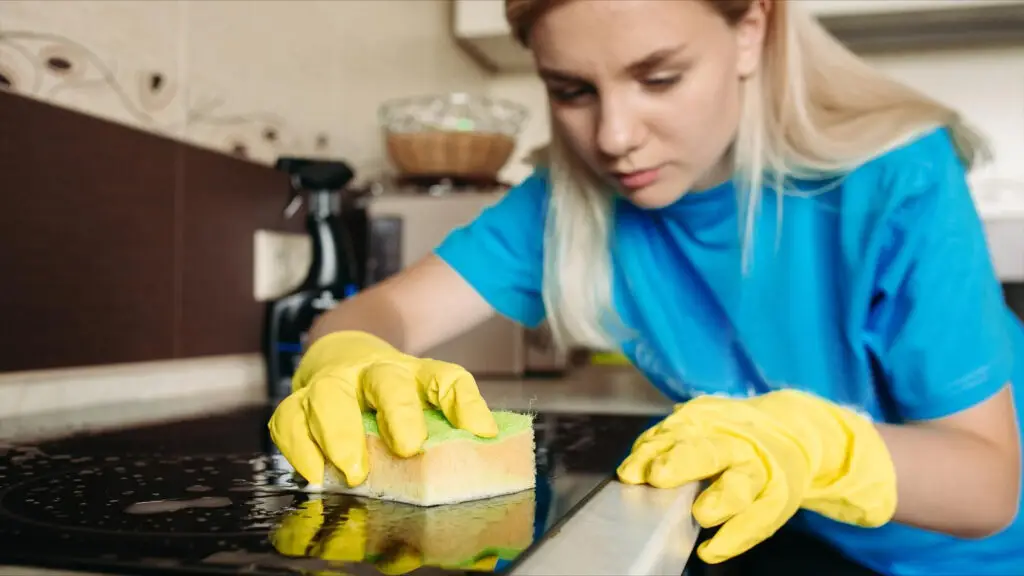
1. Wipe Cooking Surfaces Soon After Meals
Food residue hardens quickly once it cools. Quick wiping prevents grease layers from forming.
Helpful daily focus points include:
- Stovetop surfaces after cooking
- Backsplash splash zones
- Cabinet faces near cooking areas
This simple routine supports strong kitchen cleaning habits and keeps surfaces easier to maintain.
2. Keep Sink and Drain Areas Clean Daily
Drains are one of the most common odor sources. Moisture and food particles collect quickly, even after normal dishwashing.
Simple sink care usually includes:
- Rinsing drains after washing dishes
- Wiping sink basins nightly
- Emptying sink strainers regularly
Consistent drain care prevents hidden odor buildup.
3. Remove Trash Before Odors Form
Trash odors increase quickly when moisture and food waste combine. Removing trash early prevents strong smells.
Basic trash maintenance should include:
- Using sealed trash bags
- Cleaning trash cans regularly
- Disinfecting trash lids periodically
These small steps help maintain fresh kitchen air.
4. Check Refrigerator Shelves Weekly
Small spills inside refrigerators can create odors if ignored. Weekly checks help prevent hidden contamination.
Weekly refrigerator care should include:
- Removing expired food
- Wiping shelf edges and drawers
- Checking door seals for residue
These steps support strong kitchen cleaning habits and food safety.
5. Clean Range Hoods and Filters Regularly
Range hoods capture airborne grease. Over time, filters trap odor-causing residue.
Cleaning schedules usually depend on cooking frequency. Light cooking homes may clean monthly, while heavy cooking homes benefit from biweekly cleaning.
Clean filters improve airflow and odor control.
6. Maintain Small Appliances Frequently
Small appliances trap food particles and grease. Heat inside these appliances can accelerate odor development.
High-use appliances to monitor often include coffee makers, air fryers, blenders, and toasters.
Regular maintenance supports strong kitchen cleaning habits and extends appliance lifespan.
7. Maintain Pantry and Cabinet Cleanliness
Cabinets and pantries collect dust, food particles, and cooking vapor residue. Over time, this creates odor risks.
Monthly pantry maintenance usually includes:
- Wiping cabinet faces
- Vacuuming pantry shelves
- Checking expiration dates
- Cleaning shelf liners
Clean storage helps prevent contamination and pest issues.
8. Schedule Deep Cleaning When Needed
Daily and weekly routines prevent most buildup, but occasional deep cleaning removes hidden grease layers.
Professional cleaning often focuses on areas like cabinet tops, behind appliances, grout lines, and deep vent cleaning.
Deep cleaning strengthens long-term kitchen cleaning habits results.
Surface Care Prevents Odors From Becoming Permanent
Different materials react differently to cleaning products. Using incorrect cleaners can damage surfaces and trap odors permanently.
Safe surface care often includes:
- pH-neutral cleaners for stone surfaces
- Microfiber cleaning for stainless steel
- Low-moisture cleaning for wood cabinets
Proper surface care supports long-term kitchen hygiene.
Seasonal Kitchen Care for Vacation or Secondary Homes
Seasonal homes often develop odor issues because kitchens sit unused. Pre-closing and reopening cleaning routines help prevent this.
Before seasonal closing, it helps to remove perishables, deep clean refrigerators, clean garbage disposals, and wipe cabinet interiors.
Before reopening, running ice makers, flushing water lines, and disinfecting food surfaces helps restore safe use conditions.
When Kitchen Odors Signal Bigger Cleaning Problems
Some odors indicate deeper contamination that routine cleaning cannot fix.
Common warning signs include persistent greasy smells, sour refrigerator odors, musty cabinet smells, and recurring drain odors.
These signs often require deeper inspection or professional cleaning support.
Building Cleaning Routines That Actually Last
Simple routines work better than complicated cleaning schedules. Consistency reduces workload and prevents buildup from forming.
Helpful long-term routine ideas include:
- Cleaning while cooking
- Scheduling weekly mini deep cleaning
- Keeping cleaning tools easy to reach
These systems help maintain strong kitchen cleaning habits long term.
Why Fresh Kitchens Start With Prevention
Odor-free kitchens are created through consistent maintenance. Grease and moisture only become problems when allowed to build over time.
By maintaining strong kitchen cleaning habits, homeowners protect appliances, improve air quality, and create safer food preparation environments.
Clean kitchens feel fresher, function better, and support healthier homes. When prevention becomes routine, kitchen odors become rare instead of common.