
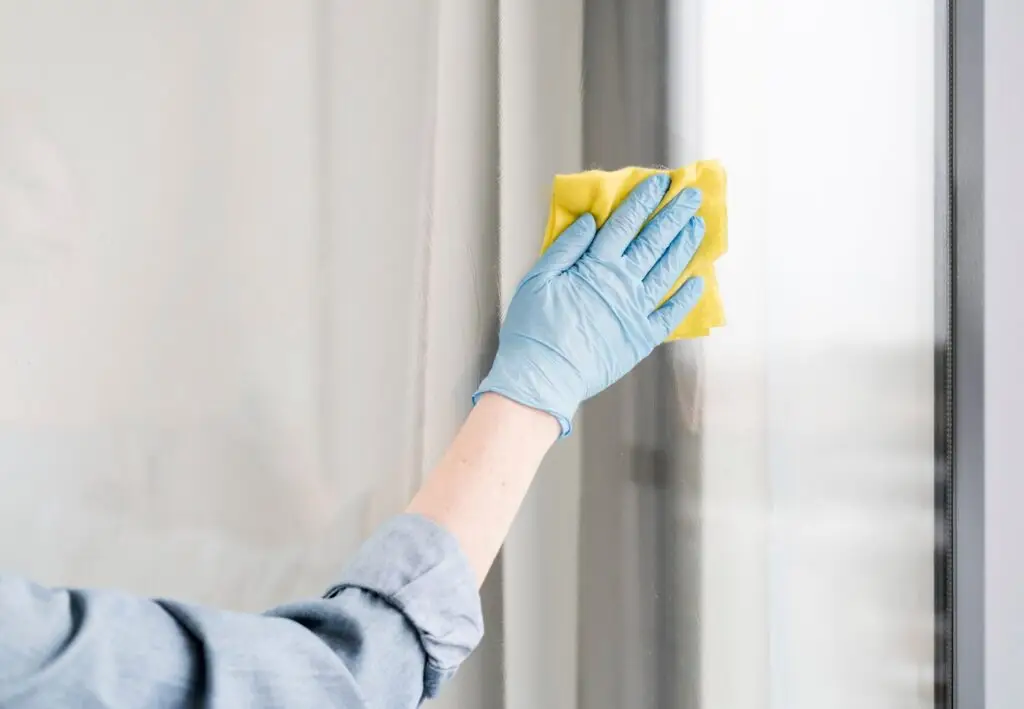
Windows are among the most overlooked surfaces in any home’s cleaning routine. Floors get vacuumed weekly, bathrooms get scrubbed regularly, but interior glass often goes unaddressed for months. On Martha’s Vineyard, that gap has consequences that go well beyond appearance.
Salt air deposits on interior glass through open windows and, to a degree, through closed ones. The result is gradual accumulation that reduces natural light, degrades glass over time, and contributes to poor indoor air quality. Understanding the real benefits of interior window cleaning changes how it fits into a maintenance plan.
What interior window cleaning actually covers
Professional interior window cleaning is not a quick spray-and-wipe job. A complete service covers the full window assembly, not only the glass pane.
Every visit typically includes:
- Glass cleaning on both sides of interior-facing panes
- Frame wiping to remove dust, salt film, and oxidation
- Sill cleaning: removing accumulated dust, dead insects, and residue
- Track vacuuming and damp cleaning to clear compacted debris
- Streak-free finish using a squeegee and lint-free cloth technique
Sills and tracks are often the most neglected part of a window. They accumulate more salt, dust, and particulate matter than the glass itself. Including them in every interior window cleaning visit is what separates a professional service from a surface clean.
Benefit 1: natural light improves more than expected
Salt film, dust, and oxidation build up on interior glass in a layer that is not always visible from across the room. But it diffuses natural light. A window that looks clean at first glance may be transmitting significantly less light than it should.
The practical effect is most noticeable in rooms with ocean or water views. A living room that relies on clear glass to connect the interior to the view outside loses a meaningful part of that quality when interior glass carries months of accumulated film. After a professional interior window cleaning, the change is immediately perceptible: the room looks brighter, larger, and more connected to the exterior.
For vacation rental properties, this matters. Guest photos and first impressions are directly affected by whether the windows are genuinely clear. Hazy or streaked glass undermines the presentation of an otherwise clean, well-maintained property.
Benefit 2: salt film removal prevents permanent glass damage
This is the most financially consequential benefit for island properties. Salt residue on interior glass is not only cosmetic. Left to accumulate over time, it initiates a process called glass etching: the salt absorbs moisture and reacts with silica in the glass surface, creating microscopic pits that produce a permanent frosted or hazy appearance. No cleaning product reverses this once it has progressed.
On Martha’s Vineyard, interior glass in ocean-facing rooms accumulates salt infiltration every time a window is opened in a sea breeze, and in smaller amounts even through closed windows. South and southwest-facing windows receive the highest exposure. In high-exposure rooms without regular interior window cleaning, etching can develop within one to two seasons.
Addressing etched glass ranges from partial restoration through professional polishing treatments, which works only on mild cases, to full pane replacement for severe damage. Both options cost substantially more than the routine cleaning that prevents the problem entirely.
Regular interior window cleaning removes salt deposits before the etching process begins. Monthly cleaning for high-exposure ocean-facing windows, and quarterly for lower-exposure rooms, is the standard maintenance interval for coastal properties.
Benefit 3: frames, sills, and tracks last longer
Window glass is the most visible part of the assembly but not the only part affected by coastal conditions. Frames, sills, and tracks face the same salt, dust, and moisture exposure, and respond in ways that create real maintenance costs over time.
Painted wood frames exposed to salt film and moisture absorption develop peeling, bubbling, and eventually wood rot at joints and sills. Aluminum and vinyl frames discolor and corrode when salt deposits are not regularly removed. Window tracks collect compacted debris that makes operation difficult and, in sliding windows, wears down the seal and weather-stripping that prevents air and moisture infiltration.
The difference in frame condition between properties that maintain regular interior window cleaning and those that do not is visible in as little as a few seasons. Paint adhesion, track function, and frame integrity are all measurably better in regularly maintained windows. The maintenance costs associated with frame repair, repainting, and seal replacement are correspondingly lower.
A professional interior window cleaning service treats the full assembly. Glass, frames, sills, and tracks get cleaned at every visit, not just when something visibly deteriorates.
Benefit 4: indoor air quality improves
Window sills and tracks are among the highest-accumulation surfaces for dust, pollen, dead insects, and salt residue in any home. In a room with multiple windows, the combined surface area of sills and tracks represents a significant ongoing source of airborne particles. Every time a window is opened, or when air circulation from an HVAC system moves through the room, that accumulated material becomes airborne.
The U.S. Environmental Protection Agency identifies settled dust and fine particulate matter as primary contributors to poor indoor air quality in residential environments. Window surfaces that go uncleaned for extended periods contribute to this particulate load continuously.
Regular interior window cleaning reduces this source directly. Clean sills and tracks do not release accumulated dust and salt particles into room air. For households with occupants who have respiratory sensitivities, allergies, or asthma, this is a practical health benefit. For vacation rental properties, it contributes to the indoor freshness guests notice on arrival before they consciously identify what they are responding to.
Benefit 5: interior window cleaning completes the cleaning standard
Interior window cleaning is the task most commonly skipped in both personal routines and standard cleaning visits. It requires specific tools, a consistent technique, and more time than wiping accessible surfaces. This is exactly why it gets deferred.
The practical consequence is a visible gap in the cleaning standard. A home with clean floors, clean bathrooms, and well-maintained surfaces but hazy or smudged glass has an inconsistency that any visitor will notice. Natural light reveals window condition immediately.
For properties used as vacation rentals or regularly hosting guests, this matters directly. One of the first things guests do on arrival is look out the windows. A clear, streak-free view signals a property that is genuinely well-maintained. A clouded view signals the opposite, regardless of how clean everything else is.
Adding interior window cleaning to the regular service schedule closes this gap and ensures the property presents consistently at a high standard.
How often should interior windows be professionally cleaned?
Frequency depends on exposure, occupancy, and use. A practical guide for Martha’s Vineyard properties:
- Ocean-facing rooms with direct salt exposure: monthly cleaning prevents salt film from advancing to the etching stage
- Lower-exposure interior rooms: quarterly cleaning maintains glass clarity and frame condition
- Vacation rental properties: glass in guest-facing areas should be cleaned at every turnover, or at minimum at seasonal opening and closing
- Seasonal properties: a full interior window clean at spring opening removes winter salt accumulation; a fall closing clean removes summer buildup before the property is sealed
Properties that have not had consistent maintenance for a season or more often benefit from starting with a deep cleaning service that addresses accumulated buildup across all areas before establishing a regular schedule.
Interior window cleaning is also available as part of additional cleaning services on a recurring basis, coordinated with the property’s regular cleaning visits so the full home is maintained at a consistent standard.
Common mistakes in DIY interior window cleaning
Most DIY window cleaning leaves residue, streaks, or misses the areas that matter most. Knowing what goes wrong helps set expectations for what professional cleaning actually delivers.
The most frequent mistakes:
- Using paper towels or microfiber cloths in a spray-and-buff method, which smears film across the glass rather than removing it
- Cleaning glass in direct sunlight, which causes cleaning solution to dry before it can be removed and leaves residue
- Skipping the squeegee, which is the only reliable method for a streak-free result on glass larger than a small pane
- Wiping glass but not cleaning frames, sills, or tracks, which leaves the primary sources of dust and particulate matter in place
- Using vinegar-based or highly acidic products on etching-prone glass, which can accelerate surface damage on already-compromised glass
Professional interior window cleaning eliminates these errors through technique, proper tools, and the experience to identify which windows need particular attention.
Frequently asked questions about interior window cleaning
How is interior window cleaning different from exterior cleaning? Interior cleaning addresses inside glass surfaces, frames, sills, and tracks. Exterior cleaning covers the outside glass and frames. On the Vineyard, both are necessary because salt deposits affect both surfaces. Interior cleaning can be done at any regular visit. Exterior cleaning for upper floors may require ladders or extension tools and is often scheduled separately.
Can interior window cleaning remove existing salt etching? Mild etching that has not penetrated deeply can sometimes be partially reduced with professional glass polishing treatments. Advanced etching that has created visible pitting in the glass surface cannot be fully reversed without pane replacement. Regular interior window cleaning prevents etching from developing in the first place, which is always more practical than treating it after the fact.
How are streaks avoided on interior glass? The correct technique uses a rubber-bladed squeegee in consistent overlapping strokes, followed by a lint-free cloth on edges and corners. Spray-and-buff methods with paper towels or standard cleaning cloths are the most common cause of streaks. This is one of the practical reasons professional cleaning produces noticeably better results than DIY attempts.
How long does a professional interior window cleaning visit take? For a typical Vineyard home with 10 to 15 windows, a thorough interior window cleaning including frames, sills, and tracks takes one to two hours. Larger homes, properties with many sliding doors, or properties with significant salt accumulation will take longer.
Does cleaning window tracks actually prevent damage? Yes. Debris-filled tracks prevent proper window closure, which allows air and moisture infiltration. On Martha’s Vineyard, that infiltration brings salt-laden air into the home continuously, accelerating the salt accumulation problem on interior glass. Clean tracks also prevent the grinding wear on sliding window mechanisms that compacted debris causes over time.
Is interior window cleaning worth it for a seasonal property that is only used in summer? Yes, and the case is particularly strong for seasonal properties. Windows that are closed for an entire off-season accumulate dust and salt that becomes harder to remove as it dries and oxidizes. A professional interior window cleaning at spring opening resets the property properly and removes any damage that developed over winter before it has time to progress.