
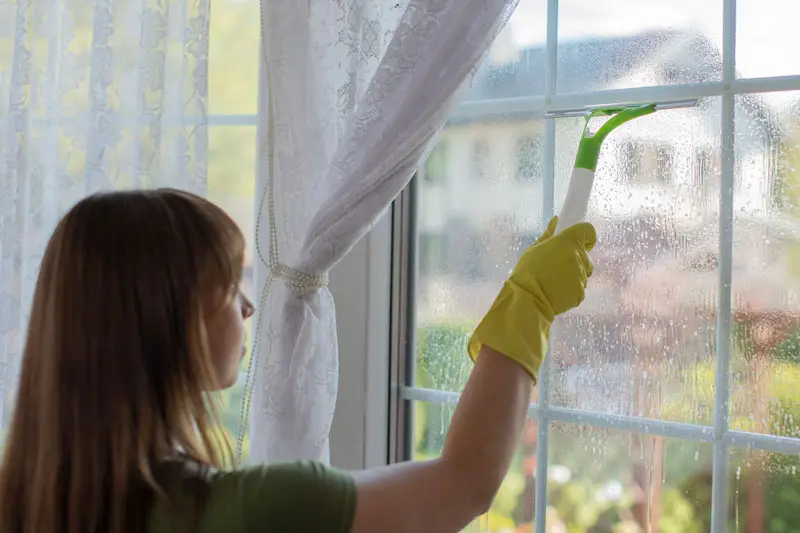
Residential window cleaning on Martha’s Vineyard is a technical task. It is not simply wiping glass. Island homes face salt air corrosion, mineral deposits from hard well water, condensation cycles that leave visible residue, and, for many properties, significant glass surface area in the form of large picture windows, sliding doors, and ocean-facing glazing that was installed specifically for the view. Getting that glass to a genuinely streak-free, haze-free finish requires a structured process that accounts for these conditions.
Effective residential window cleaning requires a structured process specifically adapted for the coastal conditions that accelerate surface degradation on island properties. This guide covers the eight steps that professional window cleaning on the Vineyard follows, the reasoning behind each step, and the specific considerations that distinguish island window care from standard residential cleaning.
Why island window cleaning requires a specific approach
Most residential window cleaning advice is written for inland properties with standard municipal water and moderate climate. Martha’s Vineyard windows operate in a different environment.
Salt air deposits: airborne salt crystals settle on glass continuously. Even interior glass near windows that are regularly opened accumulates salt residue from the air that passes through. This residue is not simply dirt. It is a mineral deposit that bonds to the glass surface over time and requires specific treatment to remove without scratching.
Hard water from island wells: many Vineyard properties use private wells, and island well water is often high in minerals. Running water over glass surfaces leaves mineral deposits that become progressively harder to remove the longer they sit.
Humidity and condensation cycles: the Vineyard’s high summer humidity means that windows in bathrooms, kitchens, and ocean-facing rooms regularly experience condensation. Each cycle deposits minerals on the glass. Over a season of daily condensation cycles, this builds visible cloudiness that cannot be removed with standard glass cleaner.
High-value glass surfaces: Vineyard properties often include large-format glass installations, floor-to-ceiling picture windows, panoramic sliding doors, and decorative glass panels, that represent significant replacement costs. Incorrect cleaning technique can cause surface scratches or damage to coatings that compromise the glass long-term.
Step 1: Safety setup and equipment preparation
Professional residential window cleaning begins with safety assessment and equipment staging, not with cleaning products.
Assess safe access for any windows above ground floor level. Stepladders placed on level, stable ground are appropriate for standard second-floor windows. Clear the interior space below each window: remove furniture, decorative items, and anything that could be damaged by drips.
Equipment needed: squeegee with a fresh rubber blade (a nicked blade leaves streaks regardless of technique); minimum four professional microfiber cloths for pre-wiping, detailing, and final buff; bucket with professional window cleaning solution mixed at the correct dilution; separate spray bottle with a 1:4 white vinegar solution for mineral deposit pre-treatment; stiff detail brush and vacuum with crevice attachment for track cleaning; dry microfiber or chamois for final buffing.
Step 2: Pre-assessment of each window
Before cleaning begins at each window, a brief assessment determines the appropriate approach. Look for mineral deposits by holding a light source at an angle across the glass. Mineral deposits show as a whitish haze distinct from dust or fingerprints. Look for salt etching: a diffuse surface cloudiness that does not respond to wiping with a dry cloth indicates mineral deposit that has partially bonded to the glass and requires pre-treatment.
Identify any coatings or films. Many Vineyard homes have solar control, privacy, or low-emissivity films applied. These require pH-neutral products and cannot tolerate the acidic pre-treatment used for mineral deposits on uncoated glass. Note any cracked panes, failing seals (visible as cloudiness between double-pane glass layers: this is condensation trapped inside the insulated unit and cannot be cleaned away), or damaged frames.
This assessment takes thirty to sixty seconds per window but prevents the application of incorrect products.
Step 3: Track, sill, and frame cleaning
Glass cleaning before track and sill cleaning is a sequencing error. Track and sill debris drops onto already-cleaned glass when disturbed, requiring a second pass on the glass.
Track cleaning: vacuum the track channel using a crevice attachment, removing loose debris before any moisture is introduced; use a stiff detail brush along the channel to loosen compacted salt and debris; vacuum again; wipe the track with a cloth wrung as dry as possible; clear weep holes, the small drainage holes in the bottom of the track frame, which become blocked with debris and cause standing water that accelerates frame corrosion.
Sill cleaning: wipe the full sill surface with a damp microfiber cloth, paying attention to corners. Dry the sill completely: a wet sill will re-wet the glass base during cleaning.
Frame cleaning: for painted wood frames, use a barely damp cloth. Excess moisture can lift paint or penetrate wood grain. For aluminum frames, a slightly stronger wipe is appropriate but avoid abrasive materials that can scratch the anodized surface.
Step 4: Mineral deposit pre-treatment
For windows with visible mineral deposits or salt haze, applying standard glass cleaner without pre-treatment moves the mineral deposits around without dissolving them. Pre-treatment dissolves the deposits so they can be wiped away cleanly.
Pre-treatment protocol for uncoated glass: apply a 1:4 white vinegar solution liberally to the glass surface; allow three to five minutes of dwell time; do not allow the solution to dry on the glass, so work in smaller sections on a hot or breezy day.
For heavily mineralized glass: a commercial descaling product formulated for glass is appropriate. Apply per manufacturer instructions, typically with a soft cloth worked in circular motions. Rinse thoroughly before proceeding to the squeegee phase.
What not to use: abrasive cleaners or scrub pads on glass; razor blade scrapers on tempered glass (common in sliding doors and large panels), as scrapers can cause fine surface scratches visible in certain light.
Step 5: Glass cleaning, squeegee method
The squeegee is the professional standard for residential window cleaning because, when used correctly, it produces a streak-free result on large glass surfaces that is difficult to achieve with cloth wiping alone.
Apply professional window cleaning solution to the glass with a scrubber sleeve or microfiber applicator, working the solution across the entire pane in overlapping horizontal strokes. Begin the squeegee pass at the top corner of the glass, maintaining firm, consistent pressure. Pull across the full width in a single stroke. Wipe the squeegee blade with a clean, dry microfiber cloth after each pass: residue on the blade is the primary cause of streaking. Overlap each subsequent pass by approximately one inch. Dry the bottom edge of the glass with a folded microfiber cloth after the final stroke.
For panoramic windows or floor-to-ceiling glass, a continuous S-pattern maintains blade contact throughout and is more efficient than separate horizontal passes.
Step 6: Detail cleaning, edges, corners, and glass dividers
The squeegee cannot reach the final centimeter of glass at the edges where the glass meets the frame. Wrap a dry microfiber cloth around a finger and run it along all four edges of the glass where it meets the frame.
For windows with multiple divided lights (small panes separated by muntins), use a microfiber cloth with a clean section for each pane to prevent cross-contamination.
For sliding glass doors, clean both panels: the primary sliding panel and the fixed panel. Pay special attention to the glass edge at the door handle, where fingerprint oils accumulate.
Step 7: Inspection under multiple light conditions
Stand back from the window and observe the glass with exterior light behind it: this reveals any remaining smearing or residue. Then hold a flashlight at a low angle across the glass surface: this reveals micro-streaks and any remaining mineral deposits invisible in normal viewing.
Any area that fails this inspection is re-treated: either with a targeted wipe for a simple streak, or with re-application of solution and re-squeegeeing for a larger area with residue.
Step 8: Final clean of sills and adjacent surfaces
Re-wipe all window sills to remove any drips or residue from the cleaning process. Check the floor area below each window for drips, particularly on hardwood and tile where cleaning solution can leave marks if allowed to dry. Remove any protective coverings placed on furniture before cleaning began. Inspect screens that were removed during cleaning and refit them securely, ensuring they are fully dry before reattaching.
How often to schedule residential window cleaning on the Vineyard
Residential window cleaning is most effective on a regular schedule. The rate of salt and mineral accumulation on island properties is faster than in continental locations.
Year-round properties: every four to six weeks for interior cleaning, with exterior cleaning as conditions and access allow.
Seasonal properties: a thorough clean at spring opening, at least one mid-season appointment, and a closing clean in fall.
High-occupancy rental properties: monthly, coordinated with the cleaning service schedule. For properties with ocean-facing windows or those near high-traffic beach access points, every three to four weeks is appropriate.
The IWCA publishes professional standards for residential window cleaning, including safety protocols and technique standards for coastal glass exposed to salt air. These benchmarks are a useful reference when evaluating whether a cleaning service is using professional-grade methods.